Carrowkeel Summer Solstice
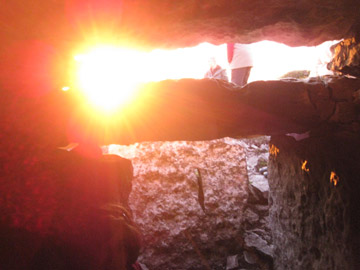 Golden sun flare through the Carrowkeel roofbox.
Cairn G has a roofbox above the entrance, similar to Newgrange. The sun enters the chamber through the roofbox at sunset for about a month before and after the summer solstice. For the days around the summer solstice the sunset illuminates the back of the chamber.
Carrowkeel Cairn G is smaller and less sophisticated than Newgrange. The passage is 2 metres long compared with 19 metres at Newgrange.
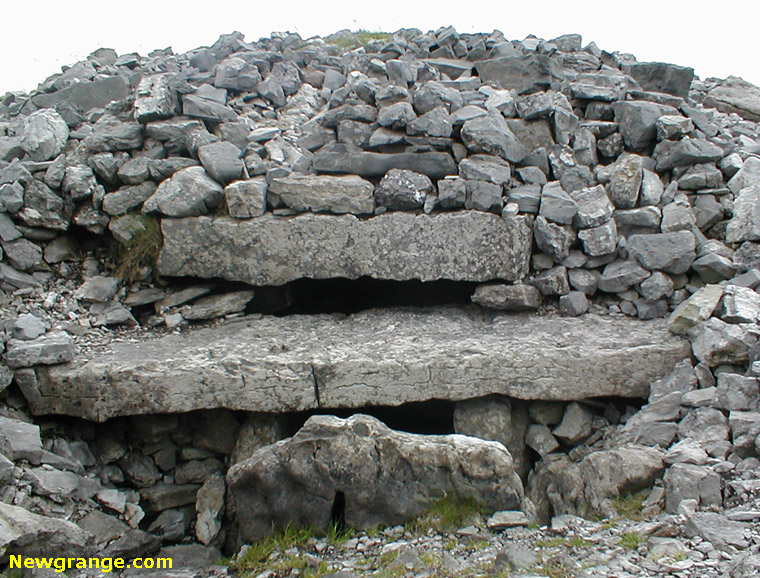 Carrowkeel Cairn G | The Summer Solstice sunset enters the chamber through the roofbox.
Carrowkeel Cairn G: Archaeology and Solar Alignment
Carrowkeel is part of one of the great Neolithic passage tomb landscapes of Ireland, dating to approximately 3500 BC, placing it among the earliest monumental traditions in Europe. The complex consists of around fourteen cairns spread across the limestone plateaus of the Bricklieve Mountains, overlooking Lough Arrow and aligned within a wider ritual landscape that includes Knocknarea and Carrowmore in County Sligo.
Cairn G itself is a classic passage tomb in design, with a short stone-lined passage leading into a central chamber with three side recesses. The chamber is constructed from carefully selected and fitted orthostats, supporting a corbelled roof that has remained intact for over five millennia. Excavations in 1911 revealed paved stone floors and evidence of burials, including human remains and artefacts such as beads made from semi-precious stones, suggesting the cairns were important ceremonial and funerary monuments.
The so-called roofbox at Cairn G is particularly significant, as it represents a rare example of this architectural feature outside of Newgrange. A roofbox is a specially constructed opening designed to admit sunlight into the chamber at specific times of the year, indicating a sophisticated understanding of solar movement among Neolithic builders. At Carrowkeel, the alignment appears to focus on the setting sun around the summer solstice, creating a gradual and changing illumination within the chamber rather than a brief event.
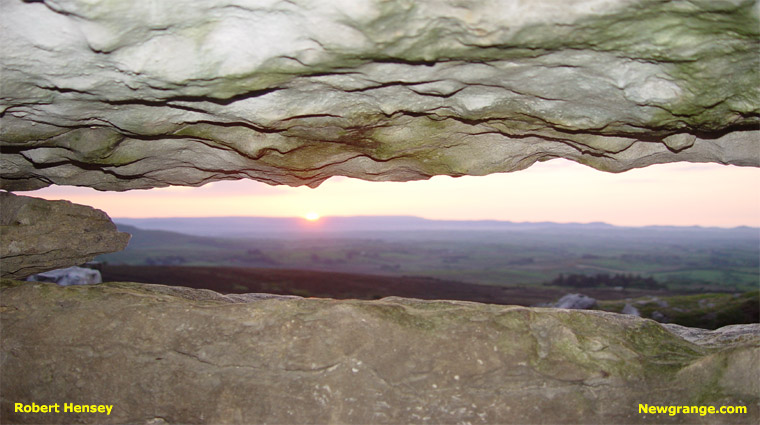 Observing the Summer Solstice sunset through the roofbox from inside Carrowkeel Cairn G.
Modern observations of the event describe a slow progression of light moving along the passage and into the chamber, changing in colour from pale white to deep gold and even reddish tones as the sun sets. This prolonged illumination, lasting several weeks around the solstice, suggests that the experience may have been intended as a seasonal spectacle rather than a single-day event, possibly linked to gatherings, rituals, or the marking of time in the Neolithic calendar.
Beyond its astronomical alignment, Carrowkeel’s elevated setting is striking. The cairns occupy prominent hilltops with wide views across the surrounding landscape, reinforcing their visual and symbolic importance. These monuments were not placed randomly, but carefully positioned within a network of sites that may have been interconnected through sightlines, movement routes, and shared cultural meaning. The scale of effort required to construct these tombs, combined with their precise alignments, points to a highly organised society capable of coordinating labour, knowledge, and belief across generations.