Walks and talks on Hill of Tara
The Discovery Programme and NUI, Galway will undertake further geophysical survey at Tara over the last two weeks of July. To coincide with this a number of walks and talks are offered in collaboration with the Office of Public Works. Admission to these events is free.
Wednesday 21st July 2010
2.30 - 4.00 pm Walking tour
(led by Conor Newman NUI, Galway and Heritage Council).
Convene at the gate.
6.00 - 6.45 pm Tara: space, monuments and symbolism
(Conor Newman NUI, Galway and Heritage Council).
Venue: Church on Tara
Wednesday 27th July 2010
4.00 - 5.00pm Walking tour on natural heritage on Hill of Tara
(led by Neil Foulkes Hedgerow conservator, Hedge Laying Association of Ireland).
Convene at the gate.
7.00 - 8.00 pm Remote sensing at Irish royal sites
(Tara; Uisneach; Dun Ailinne; Cruachain)
Roseanne Schot and Joe Fenwick NUI, Galway;
Anthony Corns and Robert Shaw, Discovery Programme.)
Venue: Church on Tara
Wednesday 28th July 2010
2.30 - 4.00 pm Walking tour
(led by Edel Bhreathnach and Mícheál Ó Cléirigh, Institute, UCD).
Convene at the gate.
6.00 - 6.45 pm Tara: kingship, politics and religion,
(Edel Bhreathnach and Mícheál Ó Cléirigh, Institute, UCD).
Venue: Church on Tara.
Please wear appropriate footwear for the walking tour and a raincoat or an umbrella in case it rains!
Speakers
Conor Newman has studied the archaeology of Tara for 18 years. He was director of the Discovery Programme's survey of Tara and is chairman of the Heritage Council. His talk will focus on the creation of religious space at Tara.
Edel Bhreathnach directed the Discovery Programme's historical analysis of Tara. She is the academic project manager at the Mícheál Ó Cléirigh Institute, UCD. Her talk will focus on the convergence of politics and religion in the kingship of Tara.
Roseanne Schot is an assistant lecturer at the department of Archaeology, NUI, Galway. She specialises in the archaeology and history of Uisneach, the sacred ‘centre' of ancient Ireland. Her talk will describe her work at Uisneach through the prism of geophysics.
Joe Fenwick was senior surveyor on the Discovery Programme's Tara survey and on NUI Galway's research project at Rathcroghan. He too specialises in the archaeology of early royal sites and headed up the geophysical survey of Tara for the last 10 years. His talk will focus on the contribution of geophysics to our understanding of early royal sites.
Anthony Corns is the GIS & IT manager at the Discovery Programme. He specialises in the application of new technology to further our understanding of archaeology and our cultural past. His talk will focus on the use of GIS for the integration of remotely sensed data sets at Tara.
Robert Shaw is currently the principal geo-surveyor at the Discovery Programme. His areas of interest include the application of remote sensing on the digital documentation of cultural heritage monuments and objects. His talk will focus on the surveying of royal sites using aerial photogrammetry and LiDAR.
Neil Foulkes is secretary of the Hedge Laying Association of Ireland and will explore some of the natural features of Tara including the hedgerows. Neil has been involved in hedgerow conservation for over 20 years and in 2010 was responsible for conducting a survey and producing a management plan for the OPW of the hedgerows at Tara.
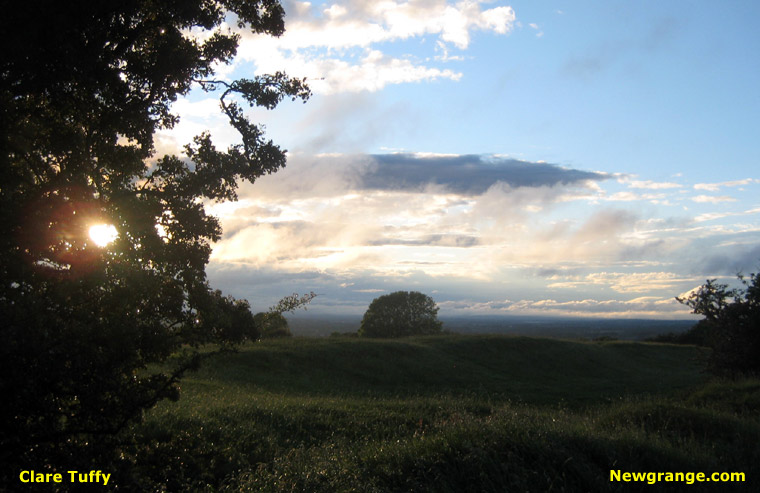 Summer Solstice Sunset on the Hill of Tara - 21st June 2008.
The Hill of Tara
The Hill of Tara (Teamhair) crowns a ridge in east Meath with views across the central plain. Irish tradition made it the foremost royal site of the island, and archaeology shows why: tombs, enclosures, and linear earthworks built over thousands of years turn the summit into a deliberate sacred geography.
Visitors walking the ridge follow paths between monuments whose names come from both excavation and medieval literature, set beside modern survey results.
The Mound of the Hostages
Dumha na nGiall is a passage tomb raised around 3500 BCE, older than the royal earthworks around it. It belongs to the same broad tradition as the Bend of the Boyne passage tombs at Newgrange, Knowth and Dowth. Sunlight reaches the chamber at the cross-quarter festivals of Samhain and Imbolc, suggesting a shared interest in solar marking across the region.
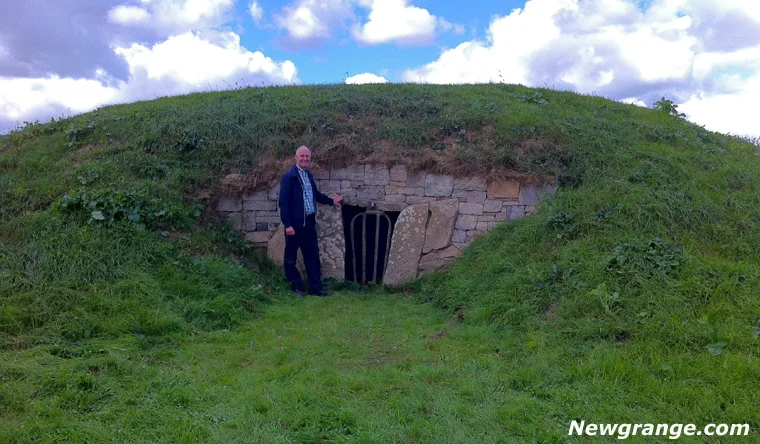 Mound of the Hostages on the Hill of Tara.
The Lia Fáil
The Lia Fáil, or Stone of Destiny, stands on the Forrad, the inauguration mound within Ráith na Ríg. Myth says it was brought from Failias by the Tuatha Dé Danann and that it would scream when a worthy king placed his foot upon it. The stone was moved in the nineteenth century, and some commentators question whether this monolith is the Lia Fáil of the earliest texts.
Rath of the Synods
A twin-banked circular enclosure, the Rath of the Synods may owe its label to church assemblies recorded centuries after the earthwork was already ancient. Its scale and form mark it as a formal meeting place on the hill.
Teach Chormaic
Teach Chormaic bears the name of Cormac mac Airt, a king celebrated in saga for wisdom and justice. The surviving monument is an earthwork ring; medieval accounts imagined a house fit for a high king, but no stone palace has been found on the ridge.
Ráith na Ríogh
Ráith na Ríg encloses the Forrad and the Mound of the Hostages within paired banks and ditches. Survey work has mapped buried pits and ditches here, supporting the idea that inauguration and seasonal rites, not everyday residence, shaped this enclosure.
Interview with Michael Slavin on the Hill of Tara
Michael Slavin author of The Book of Tara.
The Book of Tara
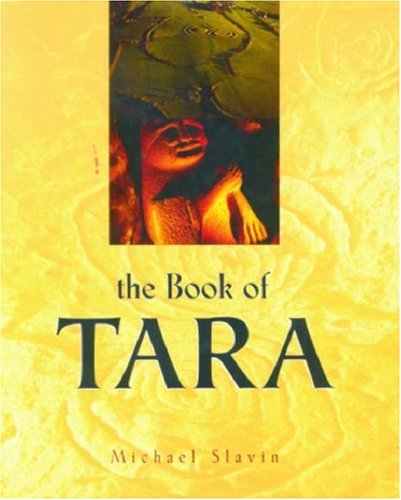
The Book of Tara by Michael Slavin is written by a local historian with a lifelong connection to the hill. It examines why the Hill of Tara became Ireland's symbolic capital, weaving together archaeology, early literature, and the legends that still shape how visitors understand the ridge.
Slavin guides the reader through the major monuments on the summit, from the Neolithic Mound of the Hostages to the royal enclosures, the Lia Fáil and the associations with St Patrick and the High Kings. He also traces Tara's later history, including its place in political memory and the events of 1798.
For anyone planning a visit to Tara, the book offers a readable companion to the landscape itself, a blend of factual account and affection for one of the most evocative sites in the Boyne Valley.
Purchase at Amazon.com or Amazon.co.uk