Hill of Tara Lecture Series - July 2012
Customs, Curses & Calamities
12th Annual Tara Lecture Series
Hill of Tara Visitor Centre
Wednesdays in July at 8.00pm.
July 4th
'There is no Curse, they say, as bad as a Widow's Curse'
The Widow's Curse in Irish Folklore and History
by Ian O Loinsigh, UCD Folklore Dept
July 18th
'The World outside Us'
Expressions of Folk Custom and Belief in the Irish Tradition
by Jonny Dillon, UCD Folklore Dept
July 25th
The End of the World was Nigh! Fearing an Apocalypse in AD1000
by Professor Tadhg O'Keeffe, UCD School of Archaeology
'The End is Nigh Or is it?' Should you worry about 'Armageddon' on December 21st 2012?
by Terry Moseley, Irish Astronomical Association
Come Early as Seats are Limited!
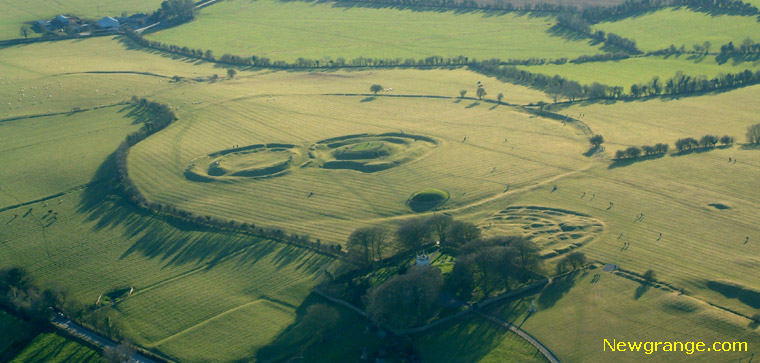 Tara Visitor Centre - Located in the former Church on the Hill of Tara.
The Hill of Tara
County Meath's Hill of Tara is managed as an open archaeological park. The former church on the summit now welcomes visitors who come to explore a ridge where Neolithic builders, Iron Age communities, and later generations all left their mark.
Medieval writers insisted that Tara was Ireland's capital, the place where the High King received tribute and justice. Modern research still debates how literally to read those claims, but the density of monuments on the hill shows it was a focus of ritual long before the first annals were written.
The Mound of the Hostages
The passage tomb Dumha na nGiall is Tara's earliest monument, raised in the fourth millennium BCE and reused for Bronze Age burials. It compares closely in date and design with the great tombs of the Boyne: Newgrange, Knowth and Dowth. A short passage admits the sun near Samhain and Imbolc, anchoring Tara in the same astronomical world as its neighbours downstream.
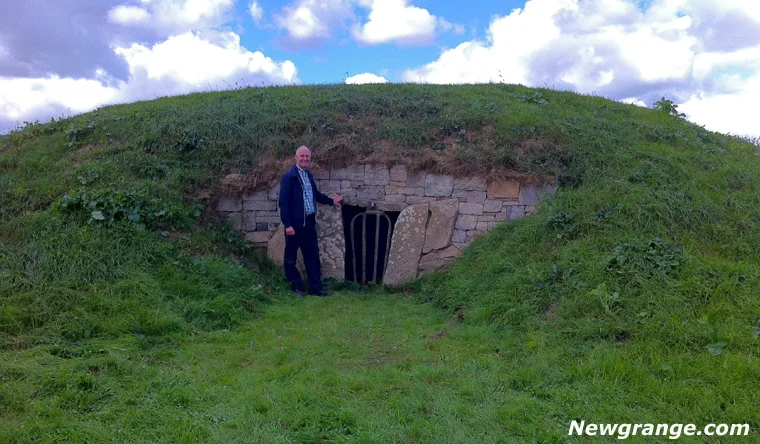 Mound of the Hostages on the Hill of Tara.
The Lia Fáil
On the Forrad stands the Lia Fáil, the Stone of Destiny of medieval inauguration tales. Brought from the otherworld city of Failias in myth, it was said to roar under a true king's touch. The present stone was set upright in the nineteenth century, and scholars note that early sources sometimes describe the Lia Fáil north of the Mound of the Hostages.
Rath of the Synods
Two concentric banks and ditches form this enclosure. Its modern name recalls church councils, yet the monument's prehistoric origin is clear from its place in the wider Tara layout.
Teach Chormaic
Teach Chormaic commemorates Cormac mac Airt in legend and in place-name. The earthwork ring on the hill carries his reputation as a law-giver even though no timber or stone house from his era survives.
Ráith na Ríogh
Ráith na Ríg, the Royal Enclosure, gathers the Forrad and the Mound of the Hostages inside a great circular bank. Hidden geophysical features, including a ditched pit circle, suggest carefully staged rites rather than domestic occupation at the centre of the hill.
Interview with Michael Slavin on the Hill of Tara
The Book of Tara
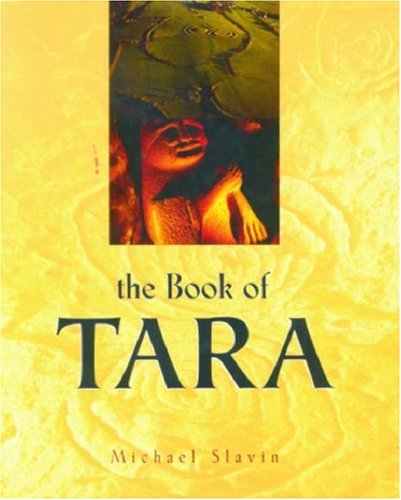
The Book of Tara by Michael Slavin is written by a local historian with a lifelong connection to the hill. It examines why the Hill of Tara became Ireland's symbolic capital, weaving together archaeology, early literature, and the legends that still shape how visitors understand the ridge.
Slavin guides the reader through the major monuments on the summit, from the Neolithic Mound of the Hostages to the royal enclosures, the Lia Fáil and the associations with St Patrick and the High Kings. He also traces Tara's later history, including its place in political memory and the events of 1798.
For anyone planning a visit to Tara, the book offers a readable companion to the landscape itself, a blend of factual account and affection for one of the most evocative sites in the Boyne Valley.
Purchase at Amazon.com or Amazon.co.uk