
Newgrange Currachs
36 foot craft currach under construction
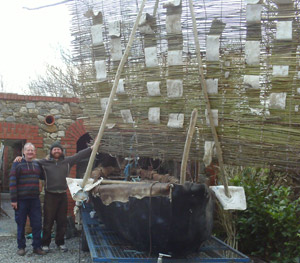 Two men beside a skin-covered currach.
Wicker currachs were the most likely method for human expansion along Western Europe's Atlantic coast in prehistoric times. Built of hazel rods, it is possible to weave a 6 foot currach for trapping salmon on inland rivers to 7 benchers which had crews of 15 men to journey on the open seas.
Newgrange Currachs are building a 36 ft craft, and hope with the input of similar minds to recreate the lost portions of this ancient puzzle, as they attempt to voyage from Spain to Ireland, across the Atlantic, in a craft that would have been in existence around the 3,500 BC or the period when Newgrange was being built.
The driving force behind the project is Claidhbh Ó Gibne, an artist whose workshop and home are located on the banks of the Boyne at Newgrange.
Getting Involved
An opportunity to experience the use of Stone Age materials and methods in reconstructing an ancient craft. Join the weekend volunteers at the workshop in Brú na Bóinne, and to give a hand; weaving the sail, carving the oars and helping to finish the currach to be ready to set sail early this summer. All you will need is a sleeping bag and a small donation towards food for the weekend.
Update - April 2010
Well after a week of north east winds and snow flakes the size of jelly fish sticking to the window, keeping the head down eventually paid off. The legs of the tripod mast sit into the skin from the legs of the cow, which in turn are attached to an ash pole, that is held in place between the oar locks on both sides of the currach. A leather strap holds it to the floor. The 3rd leg of the tripod sits into a cone of bark tanned hide which is bound to the thwart above it.
Update - March 2010
We worked on the sail and managed to complete the 12 feet of weaving, with the help of Sos and Tommy. So we hung her up to have a look, sure it wasn't long before the kids spotted it in the garden and began inventing their own fun! We have a very large hide stretched on a frame at present which, when dry enough, will be cut into wide belts and slipped down through the weave on the sail as wind breakers.
Update - February 2010
Our First Volunteer Weekend got off to a great start, Padraig arriving down on Friday evening (all the way from the Banner County) and was eager to get working almost right away! The next day the weather was bitterly cold, but didn't stop more arriving bright and early. By 10:00am we were well into it, working on the sail! Tommy and 'Sos' arrived from Navan and our own reliable Andy came also! The lads worked right through until almost 16:30, and managed to weave about 4ft of the 12ft sail!! Well done everyone.
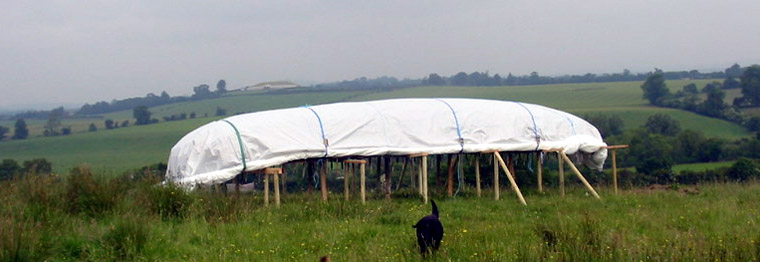 Hazel frame of the 36 foot currach with Newgrange in the background.
The Boyne Currach
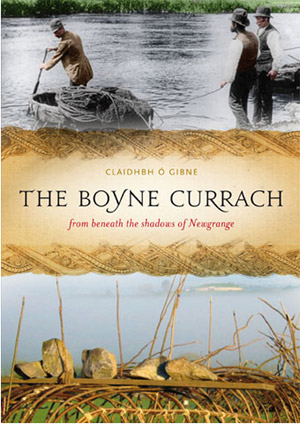
The Boyne Currach from beneath the shadows of Newgrange by Claidhbh Ó Gibne tells the fascinating story of the wicker currach and its prehistoric origins. Imbued with stories from around the globe, it is written in an energetic and accessible style, reflecting the author's love for these boats. It is a pioneering piece of work that throws new light on an ancient Irish craft.
An overview of the history of the Boyne currach and related skin boats is followed by a how-to guide with instructions on how to build your own currach, including the materials needed, where to source them and how to master the age-old techniques of weaving and binding. With so few currach-makers left, the author hopes to preserve this craft for generations to come.
The final section of the book details the Newgrange Currach Project, a unique endeavour to recreate the currach used by the builders of the Newgrange passage tombs to transport stones from far away. At 36ft in length, this wicker currach represents an incredible feat of boat engineering and a piece of living history. On completion, it will embark on a journey mirroring that believed to have been taken by the Neolithic tomb-builders, travelling as far south as Spain.
Learn more about The Boyne Currach book, including purchase details and a video of Claidhbh Ó Gibne working on a Boyne currach.