
Loughcrew Cairns by Steve Emerson
Perched on Carnbane East, the highest hill at Loughcrew, the cairns form one of Ireland’s most striking groups of Neolithic passage tombs, dating to around 3300 BC. The best known, Cairn T, is aligned with the rising sun at the equinoxes, when light enters the chamber and illuminates the carvings within.
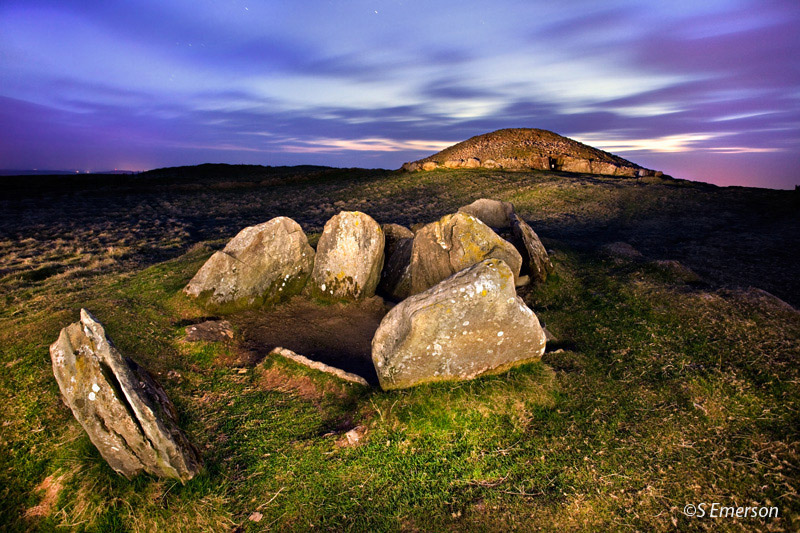 Loughcrew Cairn V with Cairn T in the background.
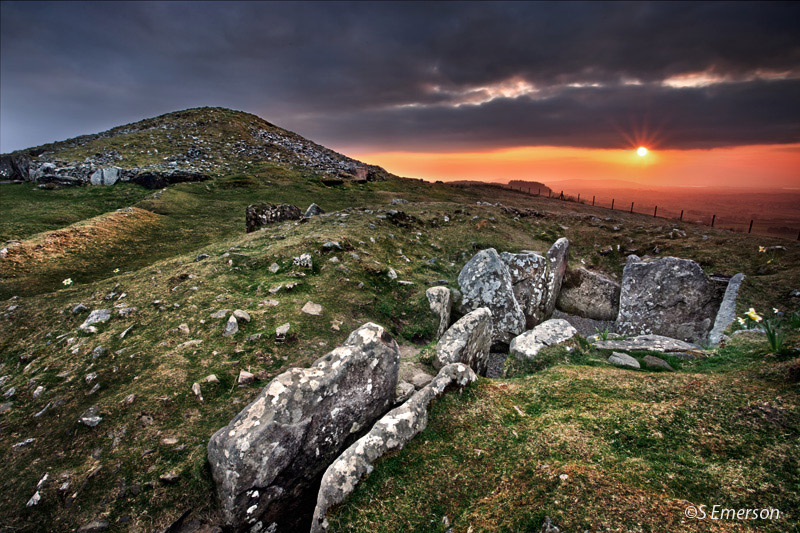 Loughcrew Cairn U with Cairn T in the background.
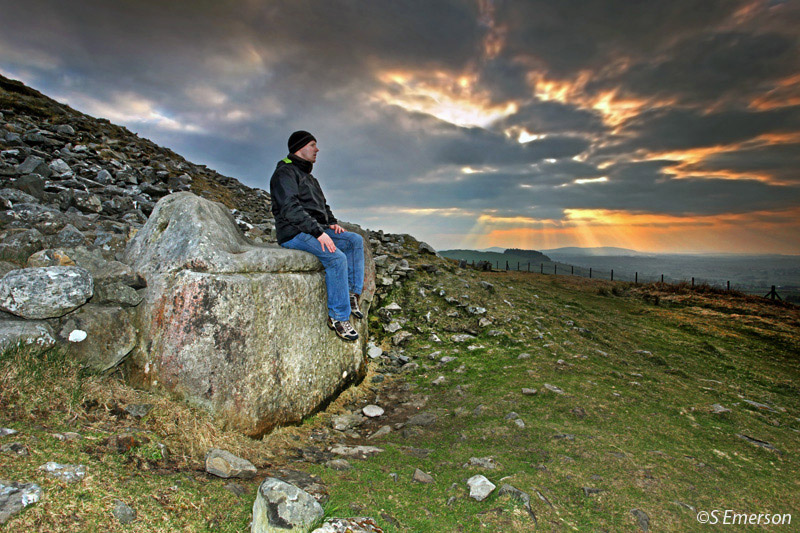 The Hag's Chair - Loughcrew Cairn T.
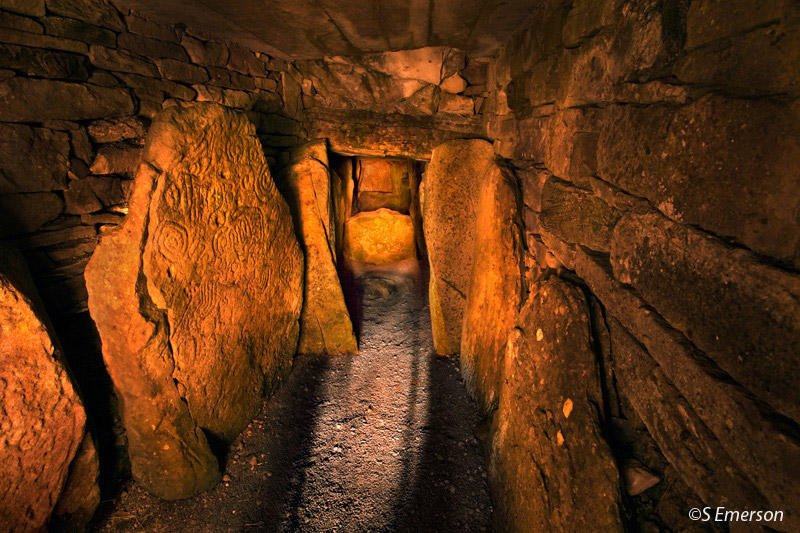 The passage of Loughcrew Cairn T.
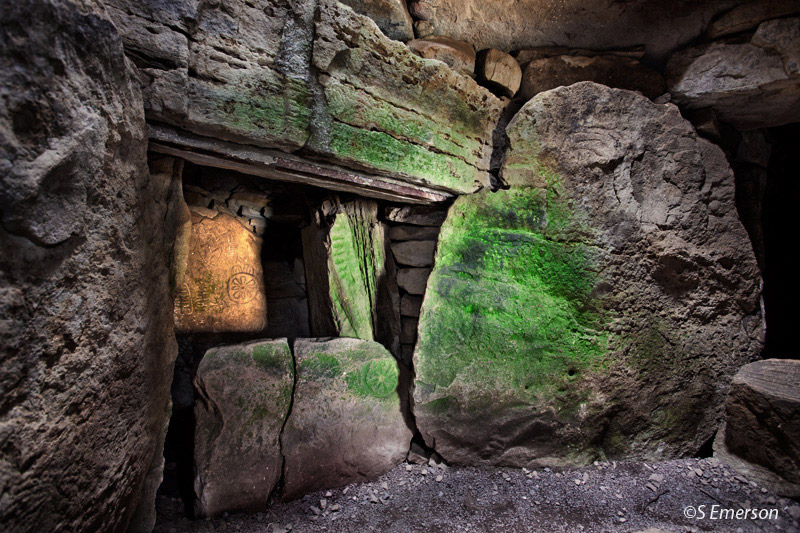 The backstone of Loughcrew Cairn T.
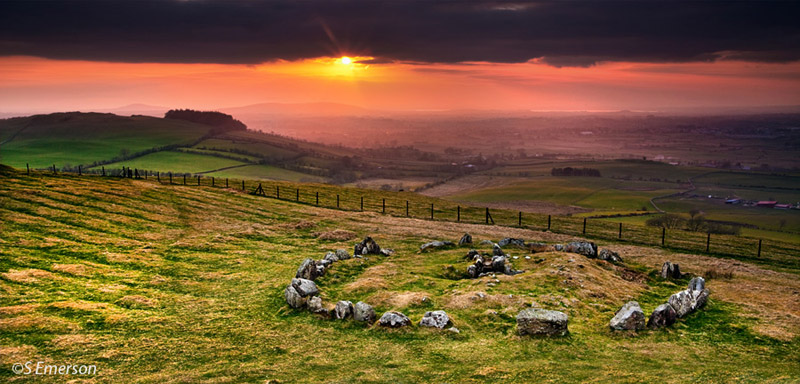 Loughcrew Cairn S.
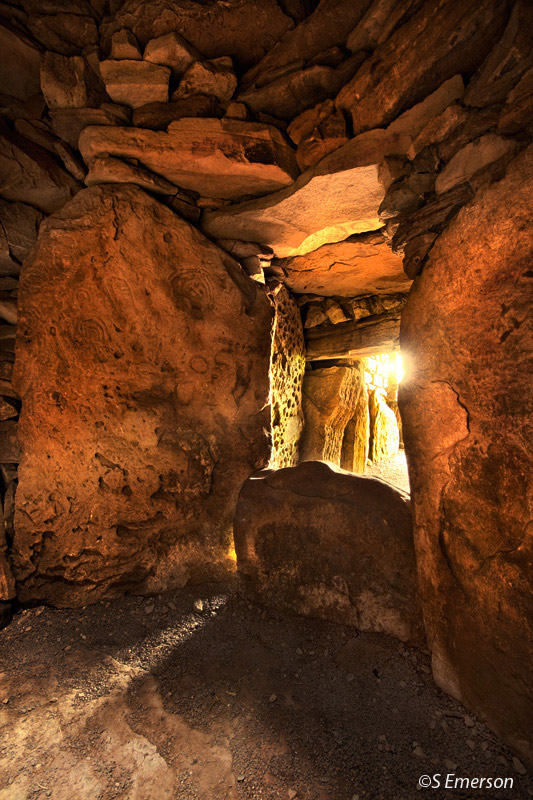 Loughcrew Cairn T.
The Passage Tomb Cemetery
Loughcrew, in County Meath, is one of Ireland's largest passage tomb cemeteries. About thirty cairns stand on the hills of Carnbane East, Carnbane West and Patrickstown. They were built around 3300 BC, in the same Neolithic period as Newgrange and Knowth.
The tombs are mounds of stone with kerbs, passages and chambers. Cairn T on Carnbane East and Cairn L on Carnbane West are the principal monuments. Cairn T faces the rising sun at the spring and autumn equinoxes.
Megalithic Art
Many of the structural stones carry megalithic art: spirals, concentric circles, rayed motifs and other geometric patterns. The photographs of the Cairn T passage and backstone show some of the best known examples. Their meaning is still argued over, but they belong to the same abstract tradition found at Brú na Bóinne.
Cairn T
Cairn T is the largest tomb on Carnbane East. A stone passage leads into a cruciform chamber under a corbelled roof. Several of the passage stones and the backstone are carved with spirals, circles and other geometric motifs. Around the equinoxes, the rising sun sends a beam of light along the passage and across the backstone.
Visiting Loughcrew
The hills are open to walkers. From the small car park it is a short climb to the cairns on Carnbane East, with wide views across Meath. In summer a guide is usually present to explain the archaeology. The interior of Cairn T remains unavailable because of conservation work.