Brú na Bóinne World Heritage Site Management Plan 2017
The Department of Arts, Heritage, Regional, Rural and Gaeltacht Affairs published the Brú na Bóinne World Heritage Site Management Plan in January 2017. The 158-page document sets out how Ireland protects and manages the archaeological landscape of the Bend of the Boyne, including Newgrange, Knowth and Dowth. Download the full plan as a PDF (8.8 MB): bru-na-boinne-management-plan-2017.pdf.
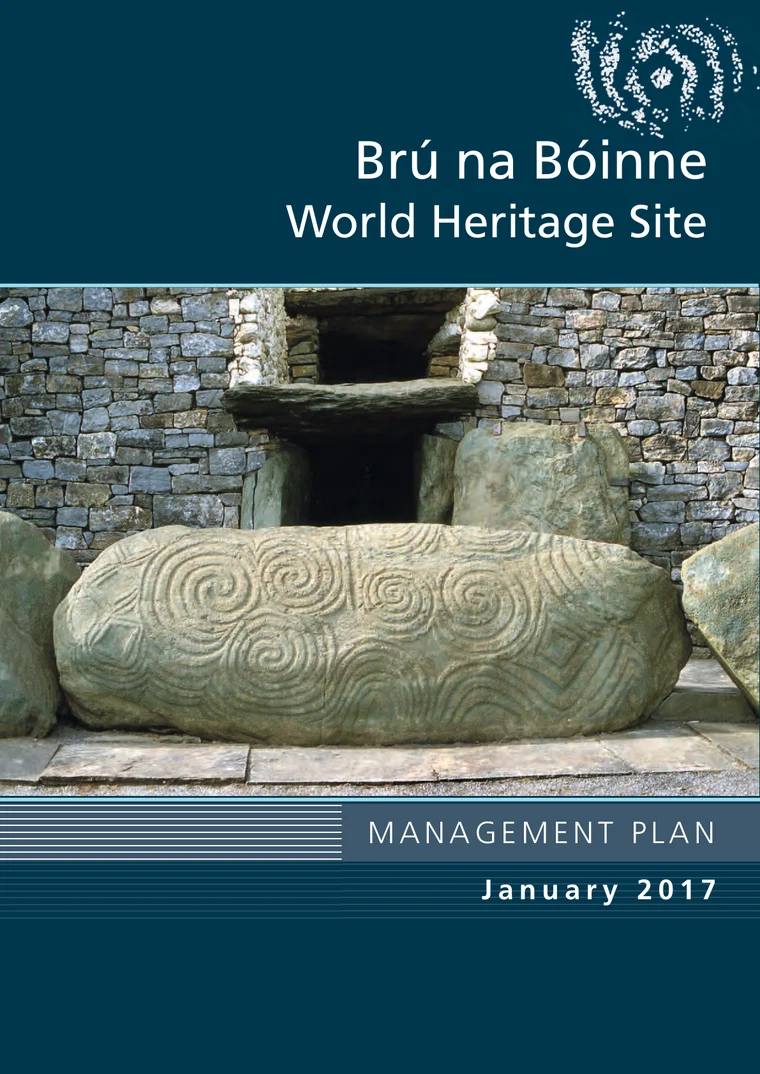 Brú na Bóinne World Heritage Site Management Plan, January 2017.
Foreword
In her foreword, Minister Heather Humphreys T.D. describes Brú na Bóinne as one of the world's most important archaeological landscapes, recognised through UNESCO World Heritage Site designation in 1993. The archaeological ensemble covers about 780 hectares, with a buffer zone of 2,500 hectares, and contains outstanding features including megalithic art, a large grouping of monuments, and evidence of continuous settlement and activity for some 7,000 years.
The Plan has a ten-year lifespan with a formal review after five years. It proposes 101 actions under 18 headings, balancing protection of the site with the needs of residents and other stakeholders. The Minister notes that new measures are proposed particularly in research and local community involvement, following an extensive public consultation process.
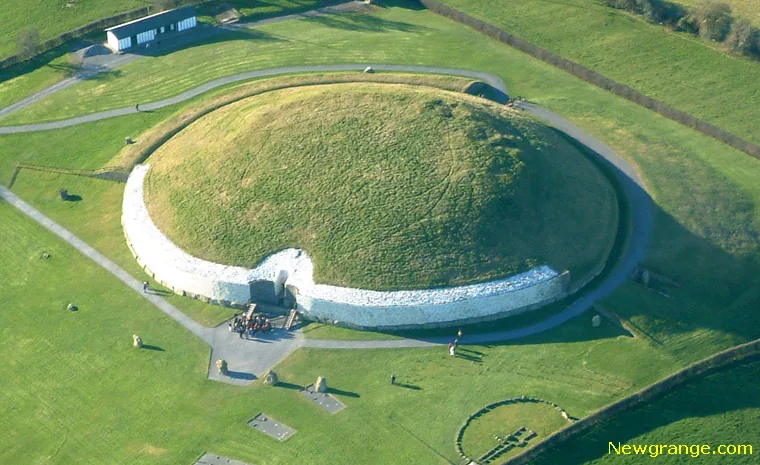 Newgrange Passage Tomb | Brú na Bóinne World Heritage Site.
Purpose and Vision
Brú na Bóinne, or the Archaeological Ensemble of the Bend of the Boyne, was inscribed on the World Heritage List in 1993. The complex lies in a distinct U-shaped bend of the River Boyne about 4.8 km west of Drogheda, mainly in County Meath with a portion adjoining County Louth.
The Management Plan provides a framework for proactive management to sustain the site's Outstanding Universal Value for future generations. It follows UNESCO Operational Guidelines and a values-led approach that anticipates and manages change. Although not a statutory document, partner organisations are expected to reflect the Plan in their own strategic and statutory plans.
Vision statement:
To protect, conserve and promote the Brú na Bóinne World Heritage Site by putting in place a management framework that will ensure its Outstanding Universal Value is maintained and enhanced for present and future generations. This will include promotion of the site as a resource for research and learning, and protection of its status as a world-class visitor experience. It will be a focus for achieving sustainable economic, social and environmental benefits for local communities.
Why Brú na Bóinne Matters
UNESCO cited the scale of passage tomb construction, the concentration of megalithic art, the range of sites and the long continuity of activity when inscribing the property. Outstanding Universal Value is linked not only with Neolithic monuments but with all monuments in the World Heritage Site, which testify to the longevity of settlement in the area.
The three major passage tombs at Newgrange, Knowth and Dowth are National Monuments in State ownership and receive the highest level of statutory protection under the National Monuments Acts. The wider landscape includes early medieval ringforts, medieval land divisions, the Boyne Navigation, Dowth Hall and other built heritage within the core area and buffer zone. Natural heritage designations include Boyne River Islands, Dowth Wetlands and other sites protected under the Wildlife Acts.
Key Objectives
The Plan sets out 18 objectives with associated actions, including:
- Statement of Outstanding Universal Value and site management structures
- Monitoring and protection of the World Heritage Site core area and buffer zone
- Promotion of wider knowledge of the significance of the World Heritage Site
- Research and understanding, including the Brú na Bóinne research framework
- Conservation of built heritage, State-owned properties and natural heritage
- Liaison with local communities through a Community Forum
- Risk management, tourism, visitor management and interpretation
- Climate change, agriculture, sustainable development and the Boyne Navigation
Planned outcomes over the ten-year lifetime include effective monitoring and reporting, safe visitor access, conservation of cultural and natural heritage, support for research, and dissemination of information to the widest possible audience.
Partners and Preparation
The Plan was prepared by the National Monuments Service with the Office of Public Works and informed by a steering group that included Meath County Council, Louth County Council, Fáilte Ireland, the Heritage Council, An Taisce, ICOMOS Ireland, the Boyne Valley Consultative Committee, Slane Historical Society and others. Drafting drew on public consultation, a review of the 2002 management plan, and environmental screening reports.
Download: Brú na Bóinne World Heritage Site Management Plan 2017 (PDF, 8.8 MB).
Published January 2017 by the Department of Arts, Heritage, Regional, Rural and Gaeltacht Affairs, National Monuments Service.