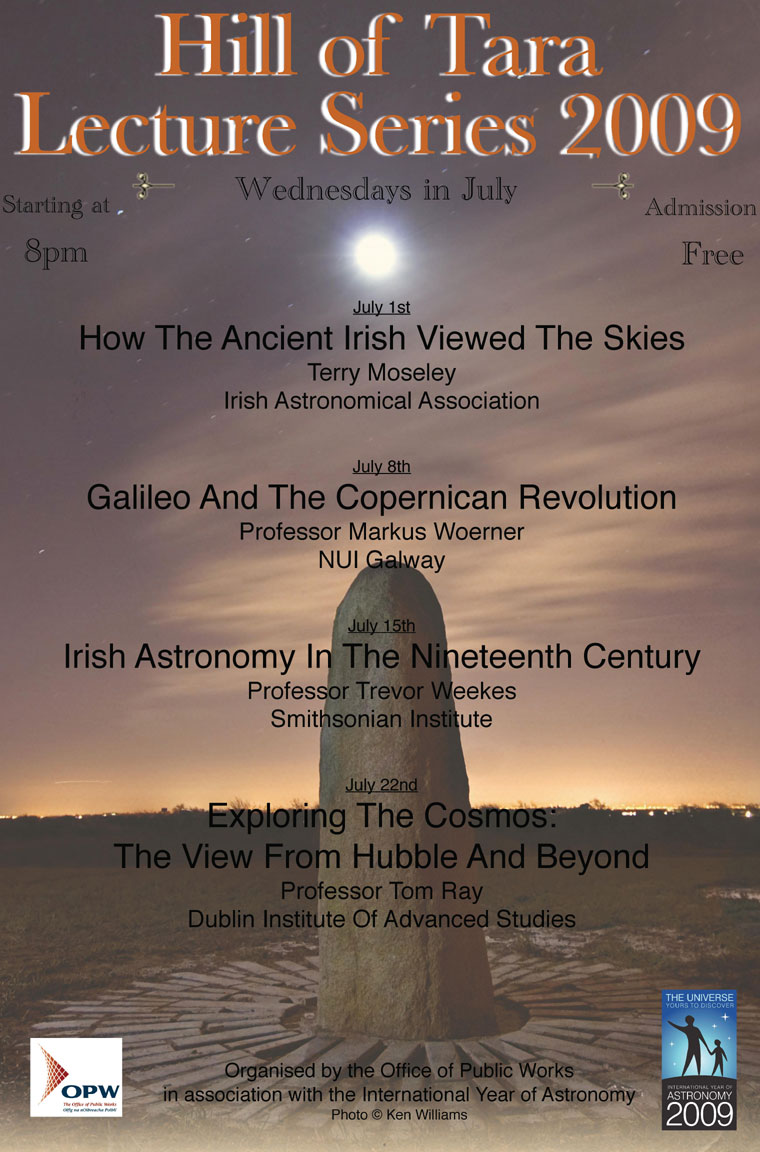
Hill of Tara Lecture Series - July 2009
- July 1st at 8pm: How The Ancient Irish Viewed The Skies, Terry Moseley, Irish Astronomical Association
- July 8th at 8pm: Galileo And The Copernican Revolution, Professor Markus Woerner, NUI Galway
- July 15th at 8pm: Irish Astronomy In The Nineteenth Century, Professor Trevor Weekes, Smithsonian Institution
- July 22nd at 8pm: Exploring The Cosmos: The View From Hubble And Beyond, Professor Tom Ray, Dublin Institute for Advanced Studies
All lectures are free of charge and take place at the Hill of Tara Visitor Centre.
 Lecture Series Organised by the Office of Public Works in association with the International Year of Astronomy.
The Hill of Tara
The Hill of Tara offers a natural outdoor classroom for astronomy as well as archaeology. Passage tombs on the ridge were built with deliberate orientations, and the Mound of the Hostages in particular admits sunlight into its chamber around the cross-quarter days of Samhain and Imbolc, complementing the famous winter solstice alignment at Newgrange downstream on the Boyne.
Irish literature cast Tara as the island's royal centre, the place where the High King symbolically married the sovereignty of the land. Whether or not a single high kingship ever ruled from here, the monuments show that sky, season, and ceremony were linked on this ridge for thousands of years.
The Mound of the Hostages
Dumha na nGiall is a Neolithic passage tomb, roughly contemporary with Knowth and Dowth as well as Newgrange. Its short passage catches the sun near the start of November and February, dates that sit midway between equinox and solstice. Later Bronze Age burials in the mound show that the tomb remained important long after it was first built.
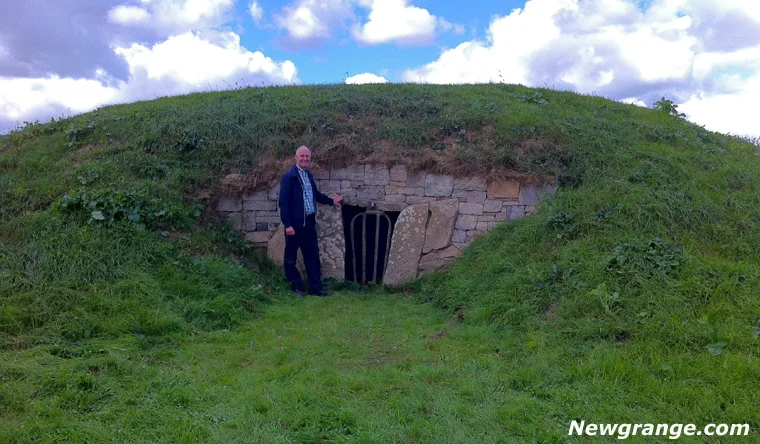 Mound of the Hostages on the Hill of Tara.
The Lia Fáil
The Lia Fáil, the Stone of Destiny, crowns the Forrad within the Royal Enclosure. Myth describes it roaring when a legitimate king was inaugurated. Some researchers, drawing on early texts, suggest the stone now on the Forrad may not be the Lia Fáil known to medieval writers.
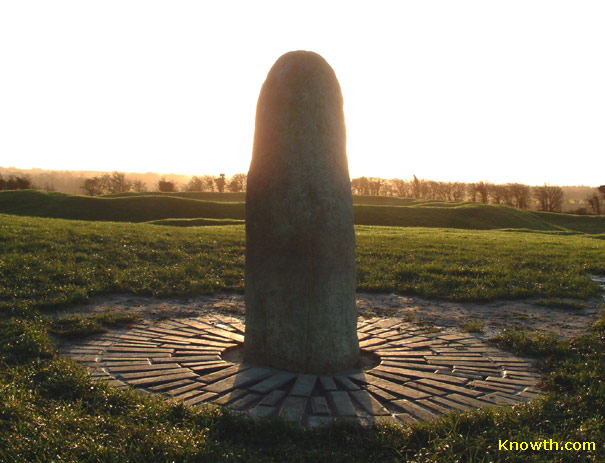 Lia Fáil (Stone of Destiny) on the Hill of Tara.
Rath of the Synods
A paired bank-and-ditch ring, this enclosure is one node in Tara's network of ritual spaces. Its synod name is historic; its form belongs to the prehistoric shaping of the hill.
Teach Chormaic
Named for the legendary king Cormac mac Airt, Teach Chormaic is an earthwork ring associated in saga with just rule and learning. No palace survives, but the monument keeps that literary memory attached to the landscape.
Ráith na Ríg
Ráith na Ríg encloses the Forrad and the Mound of the Hostages within a wide circular bank. Geophysical survey has traced buried pits and ditches here, evidence of structured rites at the heart of Tara rather than everyday domestic life.
The Book of Tara
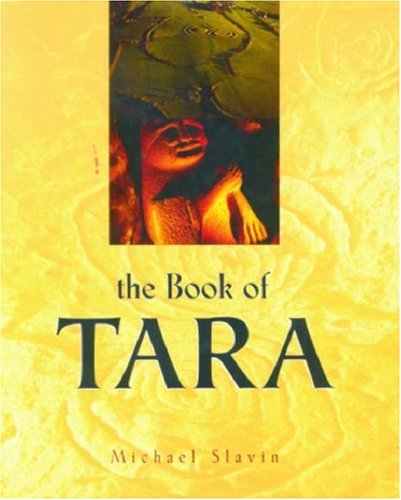
The Book of Tara by Michael Slavin is written by a local historian with a lifelong connection to the hill. It examines why the Hill of Tara became Ireland's symbolic capital, weaving together archaeology, early literature, and the legends that still shape how visitors understand the ridge.
Slavin guides the reader through the major monuments on the summit, from the Neolithic Mound of the Hostages to the royal enclosures, the Lia Fáil and the associations with St Patrick and the High Kings. He also traces Tara's later history, including its place in political memory and the events of 1798.
For anyone planning a visit to Tara, the book offers a readable companion to the landscape itself, a blend of factual account and affection for one of the most evocative sites in the Boyne Valley.
Purchase at Amazon.com or Amazon.co.uk