Hill of Tara - Beat Your Drum for National Heritage Week 2014
Hill of Tara Saturday August 23rd, 2014 2pm - 5pm. Drums will be supplied.
Come and be part of 200 drummers on the
Hill of Tara
to celebrate the launch of National Heritage Week. John Bowker
of Tribal Spirit Drumming is one of Ireland's leading community drum facilitators and is renowned for his
friendly and playful workshops. John is particularly skilled at creating a space where absolute beginners
fully enjoy the magic and power of the hand drum!
Suitable for ages 8 plus, no experience is necessary and all hand drums will be supplied.
This is a free event but pre-booking is essential at artsoffice@meathcoco.ie or phone 046-9097414.
Organised by Meath County Council and The Office of Public Works.
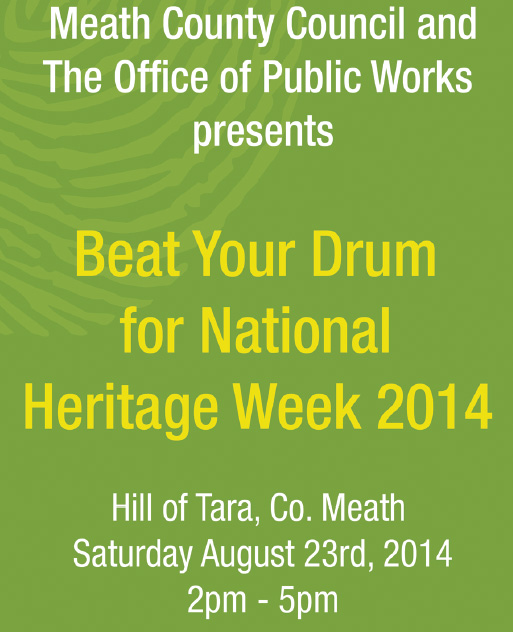 Beat Your Drum for National Heritage Week 2014.
The Hill of Tara
The Hill of Tara in County Meath has never been only an archaeological site. For generations it has served as a symbol of Irish identity, drawing crowds for political meetings as well as for heritage visits.
Medieval texts call Tara the capital of the High Kings, a claim now read alongside excavation and survey evidence. The ridge still rewards a walk through earthworks that span the Neolithic to the Iron Age, while nearby fields hold the memory of the 1798 battle and Daniel O'Connell's Monster Meeting of 1843, when hundreds of thousands gathered on the slopes. Early Irish literature also links the hill with the Tuatha Dé Danann.
The Mound of the Hostages
Dumha na nGiall is a Neolithic passage tomb, among the oldest monuments on the hill and broadly contemporary with the Bend of the Boyne tombs at Newgrange, Knowth and Dowth. Its name recalls later tradition that hostages from subject kingdoms were held here. Inside, the passage receives the sun at key points in the year, tying Tara into the same sky-watching world as its Boyne neighbours.
The Lia Fáil
On the Forrad mound sits the Lia Fáil, the Stone of Destiny. Legend says it roared when a true king stood upon it. In the 1820s the stone was repositioned near a memorial to those who fell at Tara in 1798, which explains its prominent place in the Royal Enclosure today.
Rath of the Synods
Two rings of bank and ditch define this enclosure. Historic synods may have met in the area, giving the rath its modern name, but the form of the monument belongs to Tara's prehistoric ceremonial layout.
Teach Chormaic
Named for Cormac mac Airt, a king praised in early Irish literature, Teach Chormaic is a ring-shaped earthwork. Stories describe royal feasts and judgments here; archaeology treats it as part of the complex of ritual sites crowning the hill.
Ráith na Ríogh
Ráith na Ríg, the Royal Enclosure, wraps the heart of the summit, bundling the Forrad, the Mound of the Hostages, and linked earthworks into one visible unit. It is the image most visitors carry away: a wide grass theatre where myth, history, and landscape overlap.
The Book of Tara
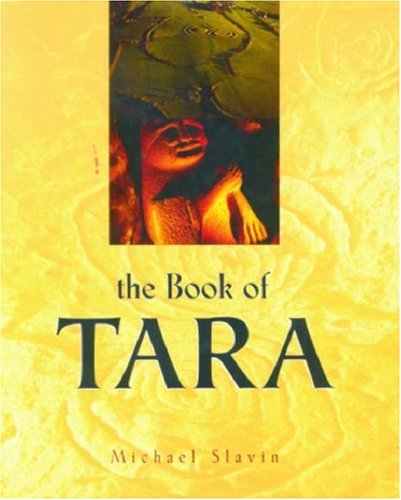
The Book of Tara by Michael Slavin is written by a local historian with a lifelong connection to the hill. It examines why the Hill of Tara became Ireland's symbolic capital, weaving together archaeology, early literature, and the legends that still shape how visitors understand the ridge.
Slavin guides the reader through the major monuments on the summit, from the Neolithic Mound of the Hostages to the royal enclosures, the Lia Fáil and the associations with St Patrick and the High Kings. He also traces Tara's later history, including its place in political memory and the events of 1798.
For anyone planning a visit to Tara, the book offers a readable companion to the landscape itself, a blend of factual account and affection for one of the most evocative sites in the Boyne Valley.
Purchase at Amazon.com or Amazon.co.uk