Hill of Tara Lecture Series 2017
Wednesdays in July @ 8.00pm.
July 5th - Dr Ann Lynch
Poulnabrone portal tomb; Ireland's earliest megalith?
July 12th - Prof Muiris O'Sullivan
Knockroe passage tomb: Jewel of the South
July 19th - Dr Roseanne Schot
Fit for a King: Tara and other regional centres
July 26th - Dr Elizabeth Shee Twohig
Knowth; the Megalithic art in Context
Hill of Tara Visitor Centre
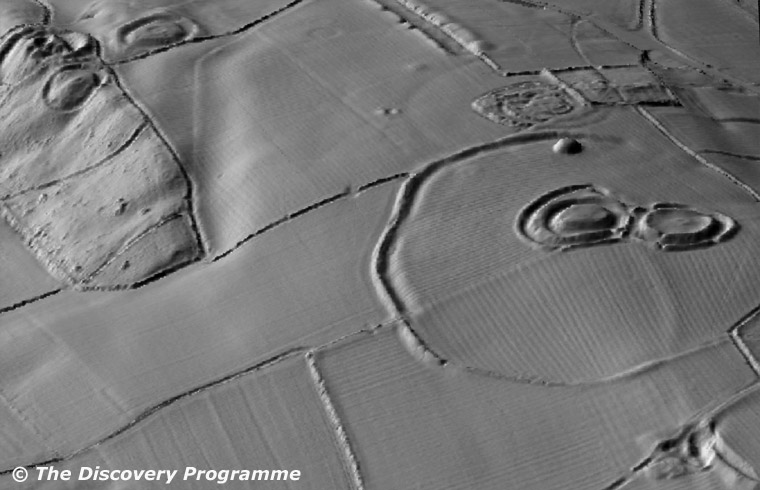 Hill of Tara | LiDAR image by The Discovery Programme.
The Hill of Tara
Modern understanding of the Hill of Tara owes much to the Discovery Programme surveys of the 1990s and 2000s, which combined excavation, geophysics, aerial photography, and LiDAR to map features hidden beneath the grass.
That work confirmed Tara as a layered ritual landscape used for more than four millennia. LiDAR and GIS modelling reveal banks, ditches, and pit arrangements that are easy to miss on a casual visit, yet they explain how the hill functioned as a centre of ceremony long before medieval scribes wrote of High Kings at Teamhair.
The Mound of the Hostages
The passage tomb known as Dumha na nGiall predates the great mounds of the Boyne and shares their interest in solar events. Around Samhain and Imbolc, light enters the short passage, linking the tomb to seasonal calendars also explored at Newgrange, Knowth and Dowth. Later burials in the mound show continuous veneration of the site.
The Lia Fáil
The standing stone on the Forrad is the Lia Fáil of tradition, said to have been one of the four treasures of the Tuatha Dé Danann. Inauguration myths describe the stone acknowledging a legitimate king. Its current setting reflects nineteenth-century landscaping as well as ancient belief.
Rath of the Synods
Geophysical plots show this double-ditched enclosure as part of a chain of formal spaces along the ridge. The synod name is medieval; the earthwork belongs to Tara's deeper prehistoric plan.
Teach Chormaic
This ring monument carries the name of Cormac mac Airt, a figure who dominates early Irish king-tales. Survey data treat it as one earthwork among many, yet the stories attached to it helped medieval writers present Tara as Ireland's logical capital.
Ráith na Ríogh
Inside the Royal Enclosure, geophysical survey traced a ditched pit circle and other buried structures invisible at ground level. Rather than a royal residence in the modern sense, Ráith na Ríg likely marked a bounded sacred zone where inauguration rites and assemblies could take place.
Interview with Michael Slavin on the Hill of Tara
The Book of Tara
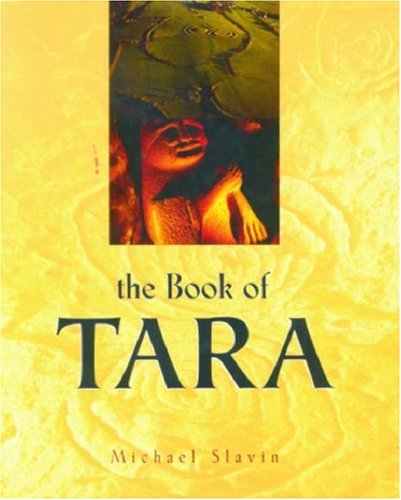
The Book of Tara by Michael Slavin is written by a local historian with a lifelong connection to the hill. It examines why the Hill of Tara became Ireland's symbolic capital, weaving together archaeology, early literature, and the legends that still shape how visitors understand the ridge.
Slavin guides the reader through the major monuments on the summit, from the Neolithic Mound of the Hostages to the royal enclosures, the Lia Fáil and the associations with St Patrick and the High Kings. He also traces Tara's later history, including its place in political memory and the events of 1798.
For anyone planning a visit to Tara, the book offers a readable companion to the landscape itself, a blend of factual account and affection for one of the most evocative sites in the Boyne Valley.
Purchase at Amazon.com or Amazon.co.uk