Newgrange - Guest Photographs III
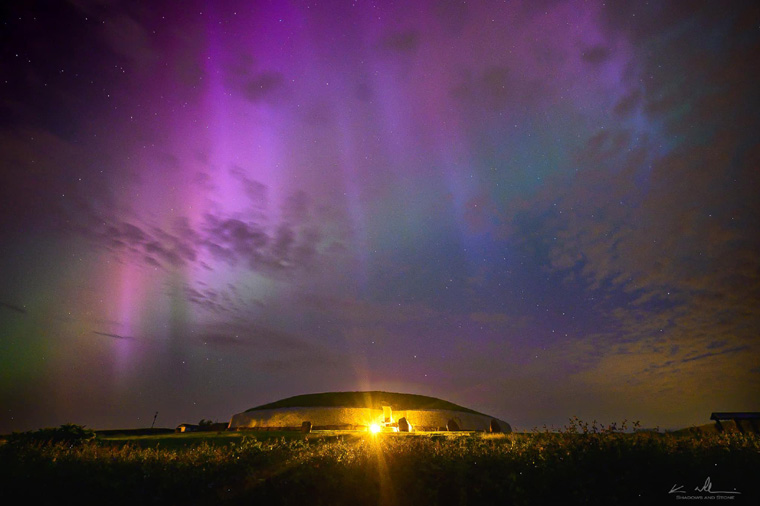 Northern Lights (Aurora Borealis) at Newgrange | Photo by Ken Williams.
Newgrange was designated a UNESCO World Heritage Site in 1993. This status recognises its universal cultural significance. Protection ensures the monument is preserved for future generations.
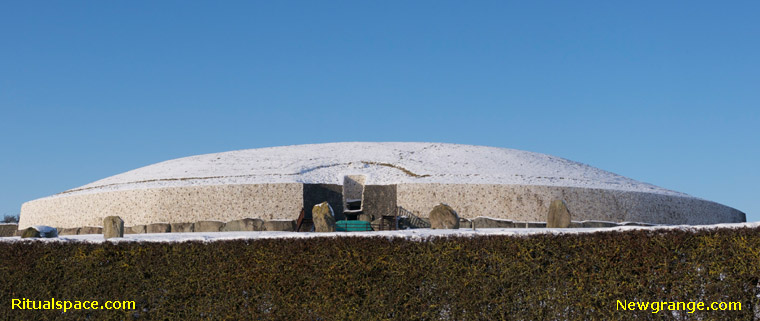 Newgrange | December 2010 | Photo by Raymond Manley.
Today, access to Newgrange is carefully controlled via the Brú na Bóinne Visitor Centre. Visitor numbers are limited to protect the structure. Entry to the chamber is guided and supervised.
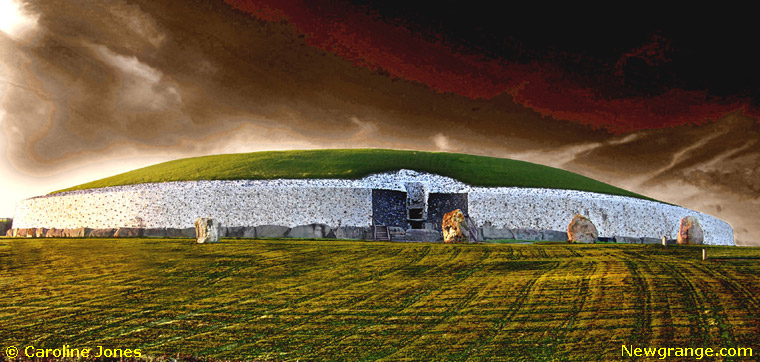 Newgrange | Digitally enhanced image | Photo by Caroline Jones.
Only a small number of people witness the winter solstice illumination each year. Places are allocated by lottery. This preserves the integrity of the event while allowing public participation.
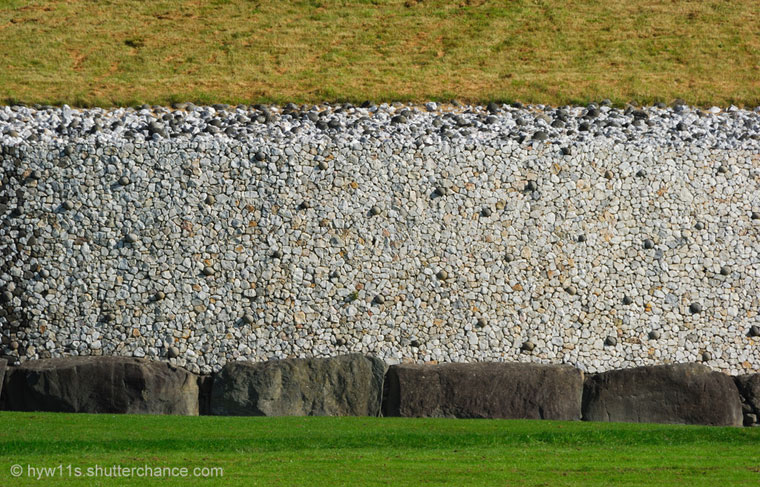 The white Quartz facade of Newgrange | Photo by Hywel Evans.
Newgrange demonstrates that Neolithic communities possessed advanced knowledge of engineering, astronomy, and symbolism. Newgrange was not an isolated achievement. It reflects a complex and organised society.
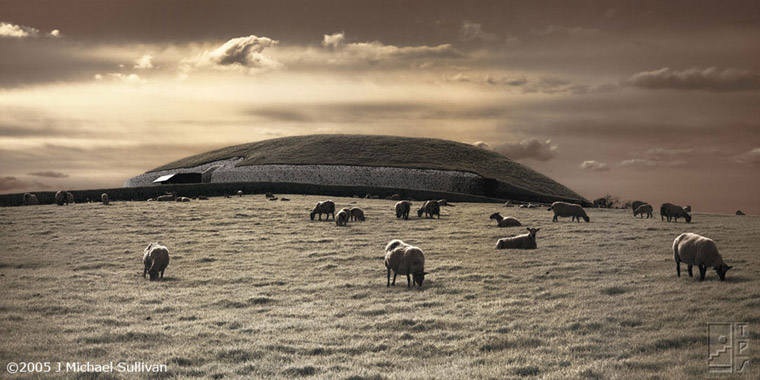 Infrared photograph of Newgrange | Photo by J Michael Sullivan.
Newgrange remains one of Ireland’s most powerful symbols of deep history. Its combination of architecture, art, and astronomy is unmatched. Even today, it inspires wonder and respect.
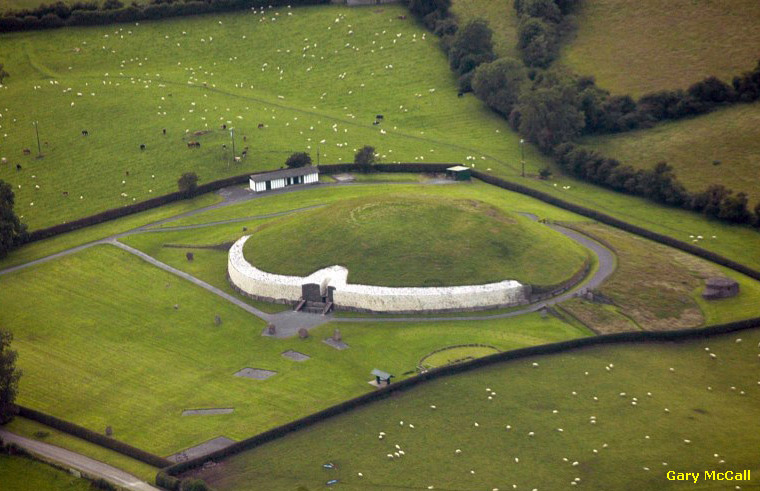 Newgrange Aerial view | Photo by Gary McCall.
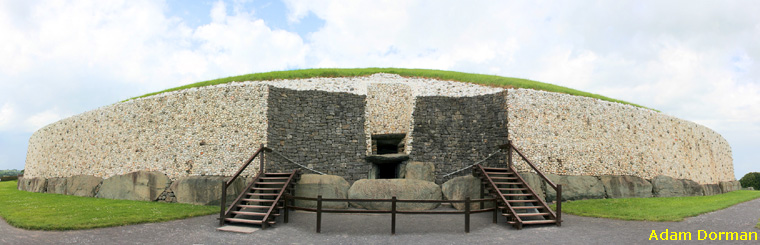 Newgrange in Ireland's Ancient East | Photo by Adam Dorman.
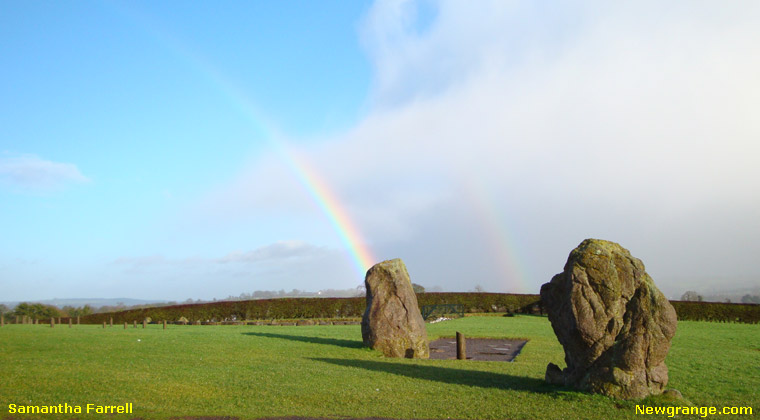 Rainbow over the Standing Stones at Newgrange | Photo by Samantha Farrell.
About Newgrange
Newgrange dates to around 3,200 BC, making it over 5,000 years old and older than both Stonehenge and the Egyptian pyramids. The monument takes the form of a large circular mound, within which a stone built passage leads to a series of inner chambers. The base of the mound is surrounded by a ring of massive kerbstones, many of them carved with prehistoric artwork.
Although Newgrange was once described by archaeologists as a passage tomb, it is now recognised as something far more complex. It is often regarded as an ancient temple, a place of astronomical observation and of deep spiritual, religious and ceremonial significance.
The passage and chamber are carefully aligned with the rising sun on mornings around the winter solstice. Newgrange is the best known monument within the Brú na Bóinne complex, alongside the related passage tombs of Knowth and Dowth. Together these form the Brú na Bóinne UNESCO World Heritage Site. Newgrange also has much in common with other Neolithic monuments across western Europe, including Gavrinis in Brittany, Maeshowe in Orkney and Bryn Celli Ddu in Wales.
Following its original use, Newgrange was deliberately sealed and lay undisturbed until the passage and chamber were rediscovered in 1699. Archaeological investigation continued over the following centuries, with the most visible reconstruction of the monument’s front taking place during the 1970s.
The Neolithic people who built Newgrange were farming communities who grew crops and kept livestock such as cattle close to their settlements. As metal had not yet been developed, their tools were fashioned from materials such as stone, wood, antler and bone.