Newgrange - Guest Photographs
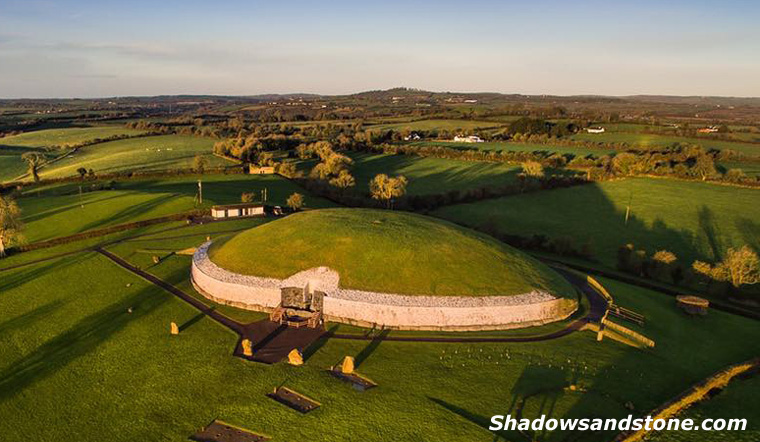 Newgrange at dawn in mid-winter | Photo by Ken Williams.
The entrance passage at Newgrange is just over 19 metres long, about 62 feet, with the floor rising gently as it leads inward. At the winter solstice, sunlight reaches the chamber not through the doorway, but via an opening above the entrance known as the roof-box.
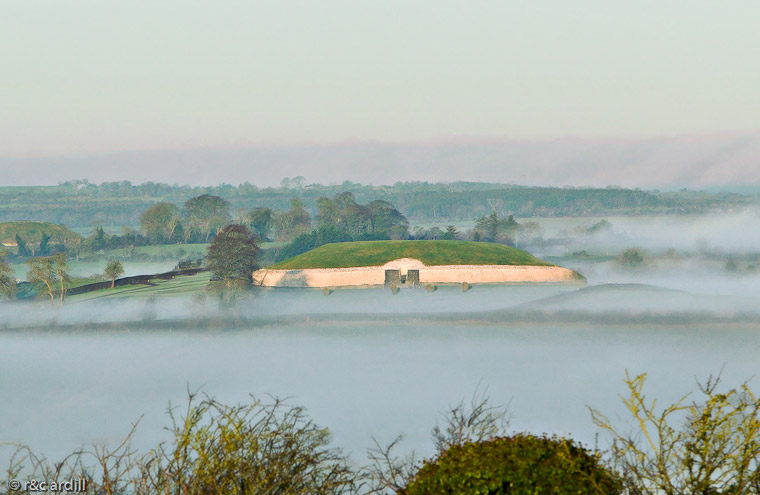 Stunning images of Newgrange | Photo by Robert and Cathy Ardill.
The passage inside the Newgrange mound leads to a cruciform chamber with three side recesses. Each recess once held a stone basin. These basins contained cremated remains and offerings.
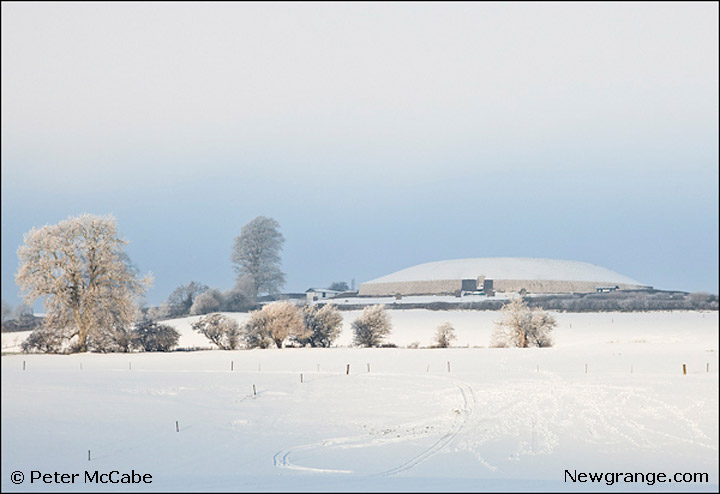 Snow covered Newgrange landscape, December 2010 | Photo by Peter McCabe.
The roof of the Newgrange chamber is constructed using corbelled stonework. Remarkably, it remains watertight after more than 5,000 years. This is a testament to the builders’ understanding of weight distribution and drainage.
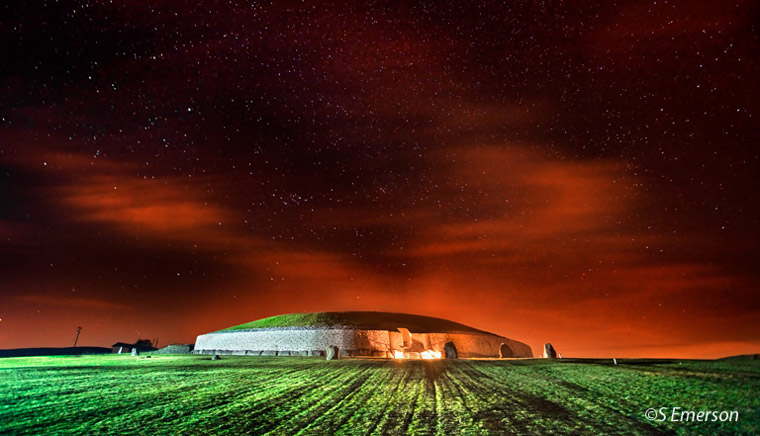 Newgrange | Photo by Steve Emerson.
Newgrange is renowned for its alignment with the winter solstice sunrise. Around December 21st, the rising sun sends a beam of light into the monument shortly after dawn, lighting up the inner chamber for 17 minutes.
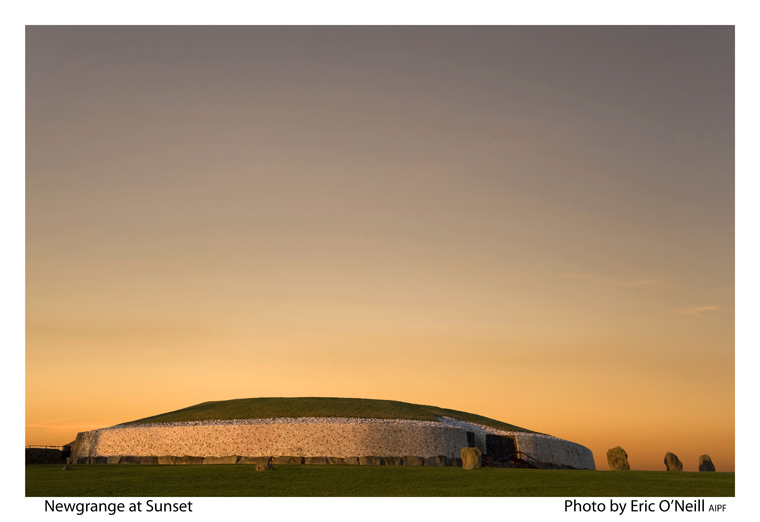
The light enters through a specially constructed opening known as the roof-box, located above the entrance. This feature is separate from the doorway itself. Its precise placement shows advanced planning and astronomical awareness.
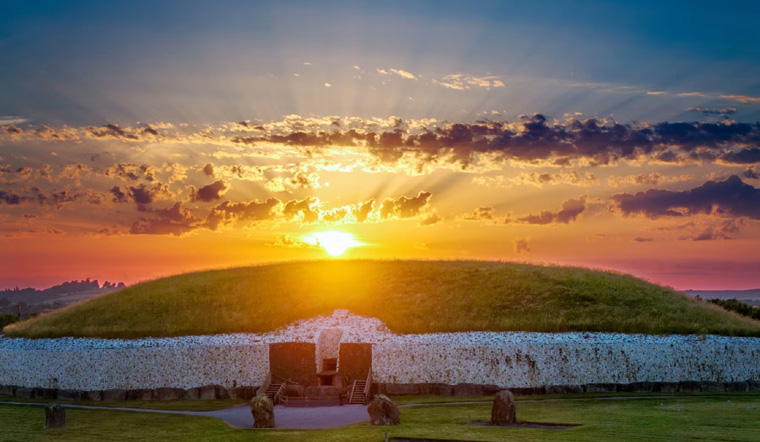 Newgrange at sunset | Photo by Irish Rain Photography.
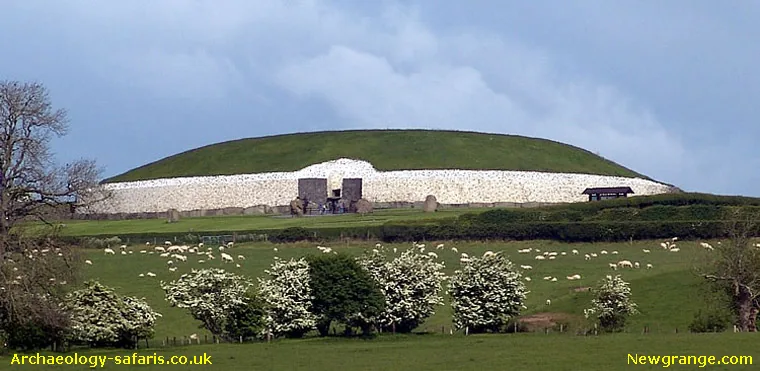 Newgrange - World Heritage Site in the Boyne Valley.
The winter solstice marked the turning point of the year, when days began to lengthen again. For Neolithic communities, this moment may have symbolised renewal, continuity, and survival. The alignment suggests ritual importance rather than practical use.
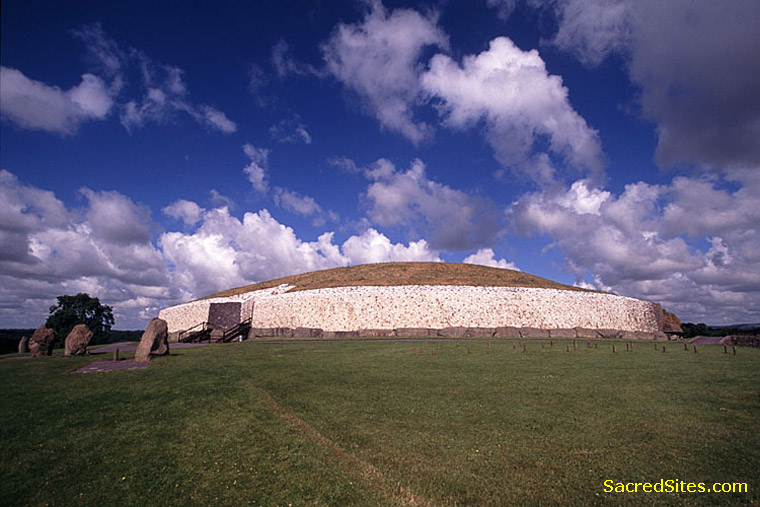 Newgrange by Martin Gray.
Newgrange was rediscovered in 1699 when local workers were quarrying stone from the mound. The entrance was exposed, drawing attention from scholars and antiquarians. Early interpretations misunderstood the monument’s true age and purpose.
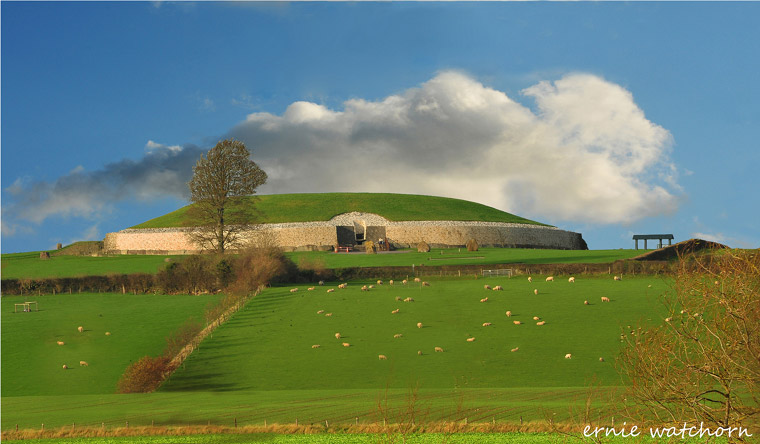 Newgrange by Ernie Watchorn.
Systematic archaeological excavation took place in the 1960s and 1970s under Professor Michael J O’Kelly. His work transformed understanding of the site. He also confirmed the winter solstice alignment through direct observation.
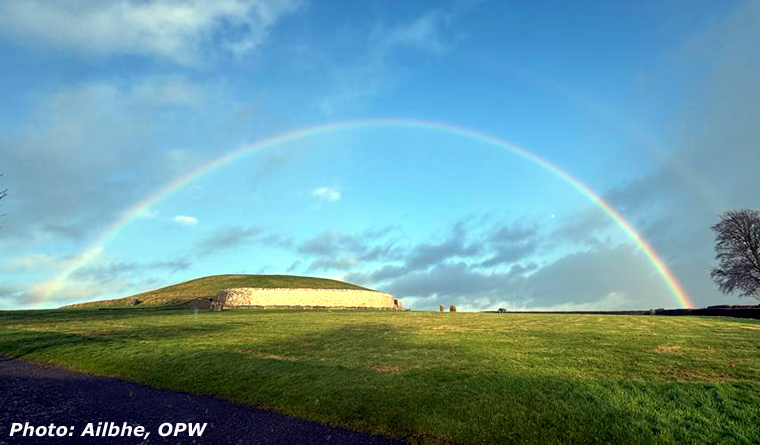 Double Rainbow over Newgrange | Photo by Ailbhe, OPW.
About Newgrange
Newgrange was built about 3,200 BC (5,200 years ago) during the Neolithic period, which makes it older than Stonehenge and the Egyptian pyramids. Newgrange is a large circular mound with a stone passageway and chambers inside. The mound is ringed by large stones known as kerbstones some of which are engraved with artwork.
Archaeologists classified Newgrange as a passage tomb, however Newgrange is now recognised to be much more than a passage tomb. Ancient Temple is a more fitting classification, a place of astronomical, spiritual, religious and ceremonial importance.
The passage and chamber is aligned with the rising sun on the mornings around the winter solstice. It is the best known monument within the Brú na Bóinne complex, alongside the similar passage tomb mounds of Knowth and Dowth, and as such is a part of the Brú na Bóinne UNESCO World Heritage Site. Newgrange also shares many similarities with other passage tombs in Western Europe, such as Gavrinis in Brittany, Maeshowe in Orkney and Bryn Celli Ddu in Wales.
After its initial use, Newgrange was sealed and it remained so until the passage and chamber were rediscovered in 1699. In the 1970s, the front of the monument was reconstructed.
The Neolithic people who built the monument were farmers, growing crops and raising animals such as cattle in the area where their settlements were located; they had not yet developed metal, so all their tools would have been made out of stone, wood, antler or bone.