Distinguished Irish Archaeologists
 William Frederick Wakeman (1822–1900) was a distinguished Irish antiquarian, archaeologist, and artist, often hailed as a pivotal figure in the development of archaeology in Ireland.
His Handbook of Irish Antiquities, is a seminal work in the field of Irish archaeology. First published in 1848,
this comprehensive guide provides detailed descriptions and illustrations of Ireland's ancient monuments and artefacts.
Wakeman's meticulous research and clear, accessible writing made the book an invaluable resource for scholars and enthusiasts alike.
William Frederick Wakeman (1822–1900) was a distinguished Irish antiquarian, archaeologist, and artist, often hailed as a pivotal figure in the development of archaeology in Ireland.
His Handbook of Irish Antiquities, is a seminal work in the field of Irish archaeology. First published in 1848,
this comprehensive guide provides detailed descriptions and illustrations of Ireland's ancient monuments and artefacts.
Wakeman's meticulous research and clear, accessible writing made the book an invaluable resource for scholars and enthusiasts alike.
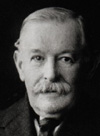 R.A.S. Macalister (1870–1950) archaeologist, epigraphist and Irish scholar, was professor of Celtic Archaeology
at University College Dublin from 1909 to 1943.
R.A.S. Macalister's publications included:
Ireland in Pre-Celtic times,
The archaeology of Ireland,
Tara: a pagan sanctuary of ancient Ireland,
Ancient Ireland: a study in the lessons of archaeology and history,
The secret languages of Ireland, with special reference to the origin and nature of the Shelta language.
R.A.S. Macalister (1870–1950) archaeologist, epigraphist and Irish scholar, was professor of Celtic Archaeology
at University College Dublin from 1909 to 1943.
R.A.S. Macalister's publications included:
Ireland in Pre-Celtic times,
The archaeology of Ireland,
Tara: a pagan sanctuary of ancient Ireland,
Ancient Ireland: a study in the lessons of archaeology and history,
The secret languages of Ireland, with special reference to the origin and nature of the Shelta language.
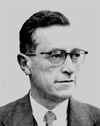 Seán P. Ó Ríordáin (1904–1957) was a pioneering archaeologist known for his significant contributions to Irish archaeology.
Initially trained as a teacher, he later pursued advanced studies in archaeology, earning his MA and Ph.D.
Seán P. Ó Ríordáin conducted extensive fieldwork, notably at Lough Gur
in Co. Limerick, where he excavated for eighteen years, shedding light on its multi-period history.
He conducted groundbreaking research on the Hill of Tara,
making significant discoveries, including an undisturbed passage grave.
Seán P. Ó Ríordáin (1904–1957) was a pioneering archaeologist known for his significant contributions to Irish archaeology.
Initially trained as a teacher, he later pursued advanced studies in archaeology, earning his MA and Ph.D.
Seán P. Ó Ríordáin conducted extensive fieldwork, notably at Lough Gur
in Co. Limerick, where he excavated for eighteen years, shedding light on its multi-period history.
He conducted groundbreaking research on the Hill of Tara,
making significant discoveries, including an undisturbed passage grave.
 P.J. Hartnett's (1908-1966) began his archaeological journey with a survey of antiquities in East Muskerry, Co. Cork, which earned him an MA degree in 1939.
He moved to Dublin to take up a position in the Irish Antiquities Division of the National Museum of Ireland. Apart from his contribution to the routine work of
that institution it was from there that he excavated such important sites as Feltrim Hill
and the now internationally known passage grave at Fourknocks, Co. Meath.
P.J. Hartnett's (1908-1966) began his archaeological journey with a survey of antiquities in East Muskerry, Co. Cork, which earned him an MA degree in 1939.
He moved to Dublin to take up a position in the Irish Antiquities Division of the National Museum of Ireland. Apart from his contribution to the routine work of
that institution it was from there that he excavated such important sites as Feltrim Hill
and the now internationally known passage grave at Fourknocks, Co. Meath.
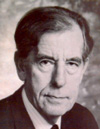 Frank Mitchell (1912-1997) studied Natural Sciences at Trinity College, Dublin.
In 1934, he assumed the role of assistant to Geology Professor Knud Jessen, conducting field studies on post-glacial sediments in Ireland.
Frank Mitchell acquired Townley Hall from Trinity College, transforming it into a self-funded study centre
that facilitated research across diverse fields, notably supporting archaeological investigations at Knowth.
Elected as a Fellow of Trinity College in 1944, he later became a lecturer in Irish Archaeology.
Frank Mitchell (1912-1997) studied Natural Sciences at Trinity College, Dublin.
In 1934, he assumed the role of assistant to Geology Professor Knud Jessen, conducting field studies on post-glacial sediments in Ireland.
Frank Mitchell acquired Townley Hall from Trinity College, transforming it into a self-funded study centre
that facilitated research across diverse fields, notably supporting archaeological investigations at Knowth.
Elected as a Fellow of Trinity College in 1944, he later became a lecturer in Irish Archaeology.
 Joseph Raftery (1913–1992)
stood out as a significant figure in Irish archaeology. He commenced his academic journey at University College Dublin,
obtaining a degree in Celtic studies in 1933, followed by a master's degree in archaeology in 1934. His master's
thesis delved into the archaeological monuments of Counties Laois and Tipperary. Later, he assumed the role of director
at the National Museum of Ireland, leaving an enduring mark through his extensive publications and pioneering excavations.
Raftery's book, Prehistoric Ireland remains a seminal work in the field.
Joseph Raftery (1913–1992)
stood out as a significant figure in Irish archaeology. He commenced his academic journey at University College Dublin,
obtaining a degree in Celtic studies in 1933, followed by a master's degree in archaeology in 1934. His master's
thesis delved into the archaeological monuments of Counties Laois and Tipperary. Later, he assumed the role of director
at the National Museum of Ireland, leaving an enduring mark through his extensive publications and pioneering excavations.
Raftery's book, Prehistoric Ireland remains a seminal work in the field.
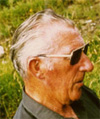 Michael J. O'Kelly (1915-1982) excavated and restored the megalithic passage tomb at
Newgrange from 1962 to 1975. Michael J. O'Kelly discovered that the builders of Newgrange
deliberately oriented the passage so that each year around the time of the winter solstice, the rays of the rising sun would
shine through a special aperture he called a roofbox to illuminate the chamber.
In Newgrange Archaeology, Art and Legend
Professor O'Kelly presents the full results of his excavations at Newgrange.
Michael J. O'Kelly (1915-1982) excavated and restored the megalithic passage tomb at
Newgrange from 1962 to 1975. Michael J. O'Kelly discovered that the builders of Newgrange
deliberately oriented the passage so that each year around the time of the winter solstice, the rays of the rising sun would
shine through a special aperture he called a roofbox to illuminate the chamber.
In Newgrange Archaeology, Art and Legend
Professor O'Kelly presents the full results of his excavations at Newgrange.
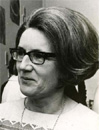 Claire O'Kelly (1916-2004) was the wife and archaeology associate of Michael J. O'Kelly.
Claire qualified as a national school teacher and while working as a teacher decided to study archaeology at night
in University College Cork. Claire O'Kelly's working career in archaeology began alongside her future husband
at Seán P. Ó Ríordáin's Lough Gur excavation. These were remarkable times, when the foundation of modern Irish archaeology
was laid with the uncovering of settlements dating to the Neolithic and the hitherto unknown beaker period.
Claire O'Kelly (1916-2004) was the wife and archaeology associate of Michael J. O'Kelly.
Claire qualified as a national school teacher and while working as a teacher decided to study archaeology at night
in University College Cork. Claire O'Kelly's working career in archaeology began alongside her future husband
at Seán P. Ó Ríordáin's Lough Gur excavation. These were remarkable times, when the foundation of modern Irish archaeology
was laid with the uncovering of settlements dating to the Neolithic and the hitherto unknown beaker period.
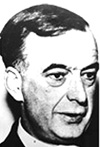 Ruaidhrí de Valera
(1916–1978) an Irish archaeologist was born in Dublin in 1916,
de Valera's passion for ancient history and culture led him to pursue a career in archaeology.
Throughout his career, Ruaidhrí de Valera made significant contributions to the understanding
of Ireland's ancient past, particularly through his meticulous studies of megalithic tombs.
In 1956, after two seasons excavation at the Mound of the Hostages on the Hill of Tara,
Seán P. Ó Ríordáin became ill and died in 1957. Ruaidhrí de Valera completed the excavation of the megalithic passage tomb in 1959.
Ruaidhrí de Valera
(1916–1978) an Irish archaeologist was born in Dublin in 1916,
de Valera's passion for ancient history and culture led him to pursue a career in archaeology.
Throughout his career, Ruaidhrí de Valera made significant contributions to the understanding
of Ireland's ancient past, particularly through his meticulous studies of megalithic tombs.
In 1956, after two seasons excavation at the Mound of the Hostages on the Hill of Tara,
Seán P. Ó Ríordáin became ill and died in 1957. Ruaidhrí de Valera completed the excavation of the megalithic passage tomb in 1959.
 Michael Herity (1929-2016) was a distinguished archaeologist and educator, demonstrated a wide-ranging expertise, a keen intellect,
and tireless dedication throughout his career, leaving a profound legacy in Celtic studies and the understanding
of Ireland's prehistoric and medieval past. In 1974 he published Irish Passage Graves,
and in 1977, along with his colleague George Eogan,
published Ireland in Prehistory.
Michael Herity (1929-2016) was a distinguished archaeologist and educator, demonstrated a wide-ranging expertise, a keen intellect,
and tireless dedication throughout his career, leaving a profound legacy in Celtic studies and the understanding
of Ireland's prehistoric and medieval past. In 1974 he published Irish Passage Graves,
and in 1977, along with his colleague George Eogan,
published Ireland in Prehistory.
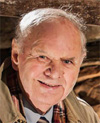 George Eogan (1930-2021) was an Irish archaeologist known for his significant contributions to the study
of prehistoric archaeology in Ireland, particularly the Neolithic and Late Bronze Ages. George Eogan conducted extensive research and excavations,
focusing on the Boyne Valley region, where he made several important discoveries related to the Neolithic period
and the ancient passage tombs at Knowth.
George Eogan (1930-2021) was an Irish archaeologist known for his significant contributions to the study
of prehistoric archaeology in Ireland, particularly the Neolithic and Late Bronze Ages. George Eogan conducted extensive research and excavations,
focusing on the Boyne Valley region, where he made several important discoveries related to the Neolithic period
and the ancient passage tombs at Knowth.
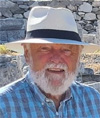 David Sweetman (1938-2023) was the Chief Archaeologist of Ireland. When David Sweetman
was with the Office of Public Works in 1982, there was a significant
discovery at Newgrange. A Beaker House alongside a crematorium and burial ground were discovered about 100 yards from the passage grave.
David's publications include
The Medieval Castles of Ireland and
Irish Castles and Fortified Houses.
David Sweetman (1938-2023) was the Chief Archaeologist of Ireland. When David Sweetman
was with the Office of Public Works in 1982, there was a significant
discovery at Newgrange. A Beaker House alongside a crematorium and burial ground were discovered about 100 yards from the passage grave.
David's publications include
The Medieval Castles of Ireland and
Irish Castles and Fortified Houses.
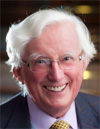 Peter Harbison (1939-2023) was one of the best-known Irish archaeologists.
Through his work with Bord Fáilte as its archaeologist from 1966, he was an effective communicator, both here and abroad,
of the sheer enormity of the riches of Ireland's cultural past, especially of its medieval past.
Peter Harbison played an important role in the development of cultural tourism to and within Ireland.
In his book Treasures of the Boyne Valley, he
traces the River Boyne from source to sea, covering human habitation from pre-history to the present day.
Peter Harbison (1939-2023) was one of the best-known Irish archaeologists.
Through his work with Bord Fáilte as its archaeologist from 1966, he was an effective communicator, both here and abroad,
of the sheer enormity of the riches of Ireland's cultural past, especially of its medieval past.
Peter Harbison played an important role in the development of cultural tourism to and within Ireland.
In his book Treasures of the Boyne Valley, he
traces the River Boyne from source to sea, covering human habitation from pre-history to the present day.
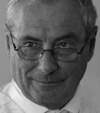 Peter Woodman (1943-2017) was emeritus professor of archaeology at UCC. With 113 publications to his name, he was the leading authority
on the Irish Mesolithic (8,000BC-4,500BC), a period during which the first settlers arrived in Ireland.
Peter Woodman's book Ireland's First Settlers
encompasses 50 years of research to make sense of what initially "appeared to be little more than a collection of beach-rolled and battered flint tools".
Peter Woodman (1943-2017) was emeritus professor of archaeology at UCC. With 113 publications to his name, he was the leading authority
on the Irish Mesolithic (8,000BC-4,500BC), a period during which the first settlers arrived in Ireland.
Peter Woodman's book Ireland's First Settlers
encompasses 50 years of research to make sense of what initially "appeared to be little more than a collection of beach-rolled and battered flint tools".
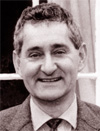 Barry Raftery (1944–2010) was one of Ireland’s foremost archaeologists and a leading authority on the Irish Iron Age.
Educated at University College Dublin, he spent most of his academic career there, later becoming Professor of Celtic Archaeology.
Raftery is best known for his work on hillforts, wetland archaeology and the Iron Age wooden trackways of the Irish Midlands,
particularly the Corlea Trackway in County Longford. His influential book Pagan Celtic Ireland helped reshape understanding
of Iron Age society in Ireland.
Barry Raftery (1944–2010) was one of Ireland’s foremost archaeologists and a leading authority on the Irish Iron Age.
Educated at University College Dublin, he spent most of his academic career there, later becoming Professor of Celtic Archaeology.
Raftery is best known for his work on hillforts, wetland archaeology and the Iron Age wooden trackways of the Irish Midlands,
particularly the Corlea Trackway in County Longford. His influential book Pagan Celtic Ireland helped reshape understanding
of Iron Age society in Ireland.