Newgrange Kerbstone K10
It is one of the 97 kerbstones numbered in Professor Michael J. O'Kelly's record of the monument. Walking clockwise from the entrance stone (K1), K10 is nine stones away from the entrance.
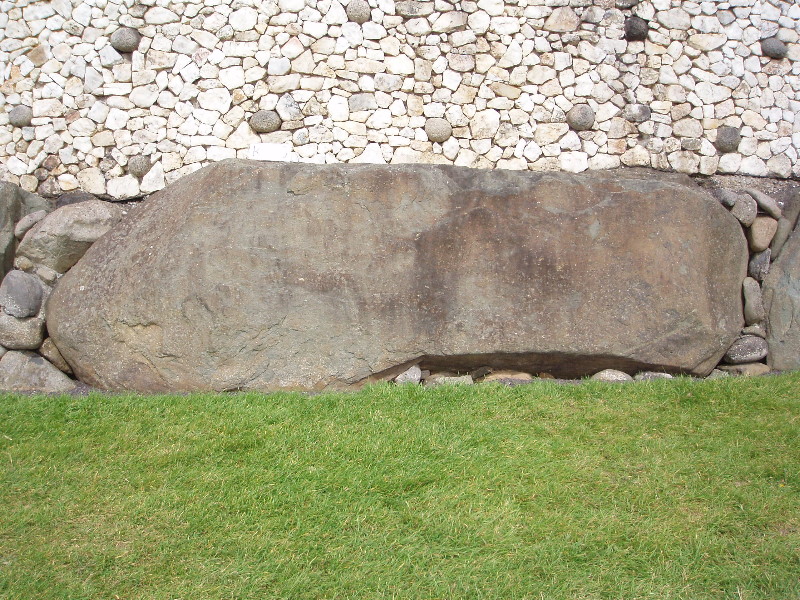 Newgrange Kerbstone K10.
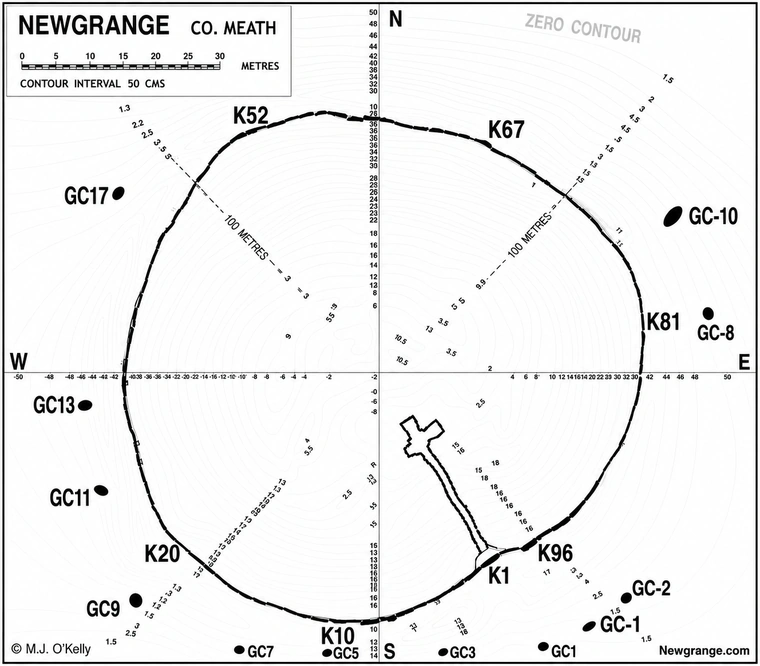 Plan of Newgrange Mound adapted from Newgrange - Archaeology, Art and Legend.
Newgrange – Archaeology, Art and Legend
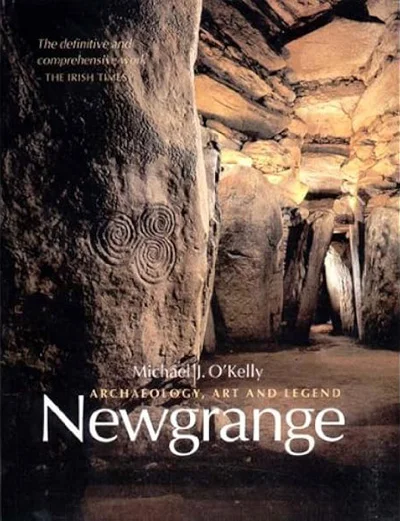
Newgrange – Archaeology, Art and Legend by Professor Michael J. O'Kelly and Claire O'Kelly is the definitive archaeological study of Newgrange and one of the most important books ever published on an Irish prehistoric monument.
Based on Professor Michael J. O'Kelly's excavations between 1962 and 1975, the book explains the construction, chronology, megalithic art and winter solstice alignment of Newgrange. O'Kelly also describes the excavation, interpretation and restoration of the great passage tomb using detailed archaeological records and architectural analysis.
Richly illustrated throughout, the volume includes the important contribution of Claire O'Kelly, who collaborated closely in the excavation and recording of the site from its earliest seasons.
First published in 1982, with a paperback edition in 1988, the book remains an essential reference for anyone interested in the archaeology, megalithic art and wider significance of Newgrange and the Boyne Valley.
Purchase at Amazon.com or Amazon.co.uk
Newgrange | Brú na Bóinne
Architecturally, Newgrange belongs to the cruciform passage-tomb class: a long passage, a chamber with three recesses, corbelled roofing and an encircling kerb. The design recurs at Knowth and Loughcrew with local variations.
Art historians group Boyne Valley carvings with passage-tomb art, distinct from later Beaker and Bronze Age traditions. Spirals, lozenges, serpentiforms and picked backgrounds characterise the style.
Conservation at Newgrange balances public access with protection of soft greywacke surfaces. Touching carved kerbstones is discouraged; photography from the path is the main record most visitors take away.
Kerbstone numbering runs clockwise from the entrance stone K1.