Newgrange Kerbstone K12
It is one of the 97 kerbstones numbered in Professor Michael J. O'Kelly's record of the monument. Walking clockwise from the entrance stone (K1), K12 is eleven stones away from the entrance.
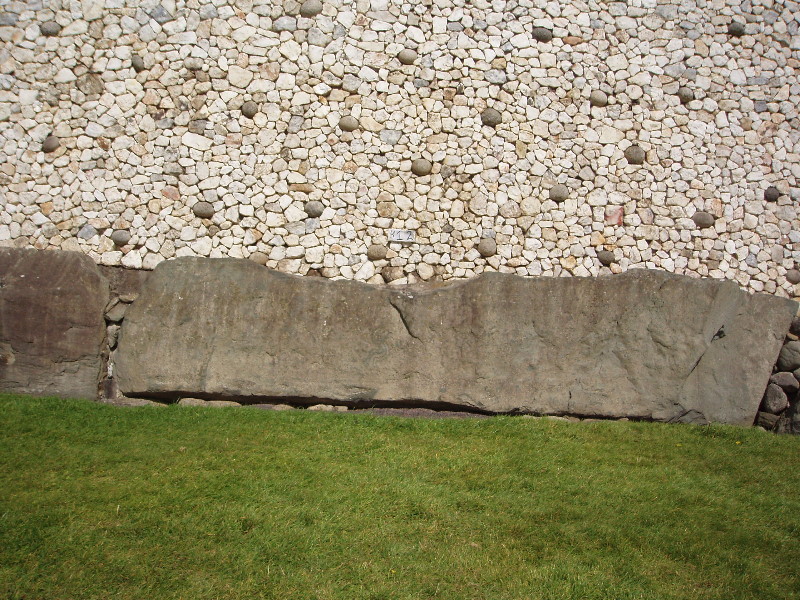 Newgrange Kerbstone K12.
Megalithic art on Kerbstone K12 is illustrated in Claire O'Kelly's corpus (Michael J. O'Kelly, Newgrange: Archaeology, Art and Legend, O'Kelly 1982).
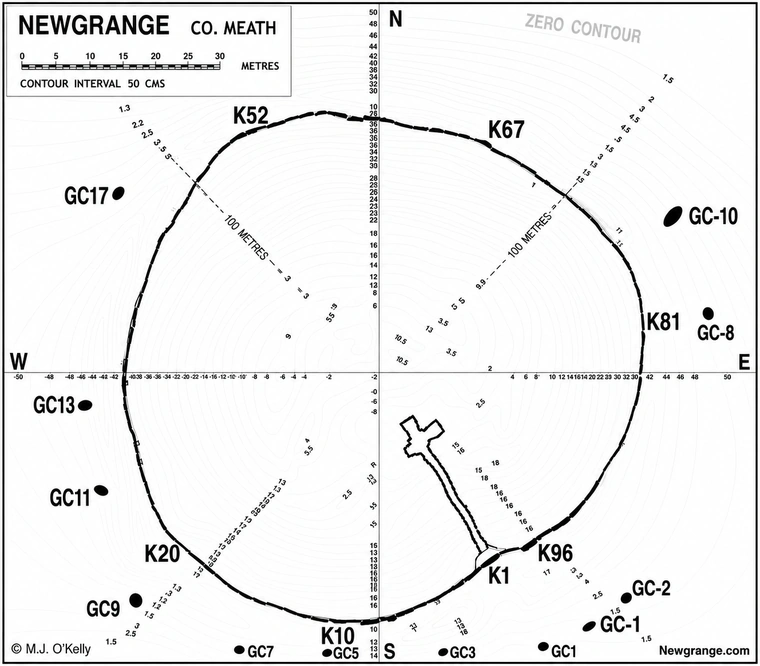 Plan of Newgrange Mound adapted from Newgrange - Archaeology, Art and Legend.
Newgrange – Archaeology, Art and Legend
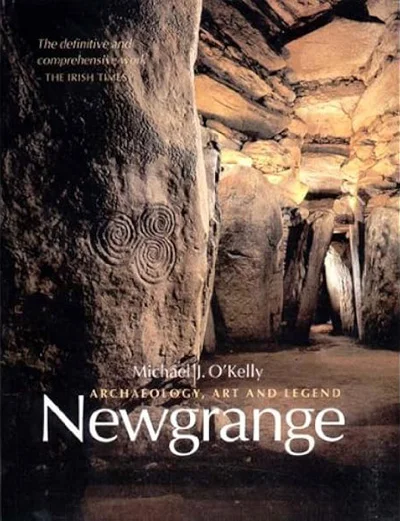
Newgrange – Archaeology, Art and Legend by Professor Michael J. O'Kelly and Claire O'Kelly is the definitive archaeological study of Newgrange and one of the most important books ever published on an Irish prehistoric monument.
Based on Professor Michael J. O'Kelly's excavations between 1962 and 1975, the book explains the construction, chronology, megalithic art and winter solstice alignment of Newgrange. O'Kelly also describes the excavation, interpretation and restoration of the great passage tomb using detailed archaeological records and architectural analysis.
Richly illustrated throughout, the volume includes the important contribution of Claire O'Kelly, who collaborated closely in the excavation and recording of the site from its earliest seasons.
First published in 1982, with a paperback edition in 1988, the book remains an essential reference for anyone interested in the archaeology, megalithic art and wider significance of Newgrange and the Boyne Valley.
Purchase at Amazon.com or Amazon.co.uk
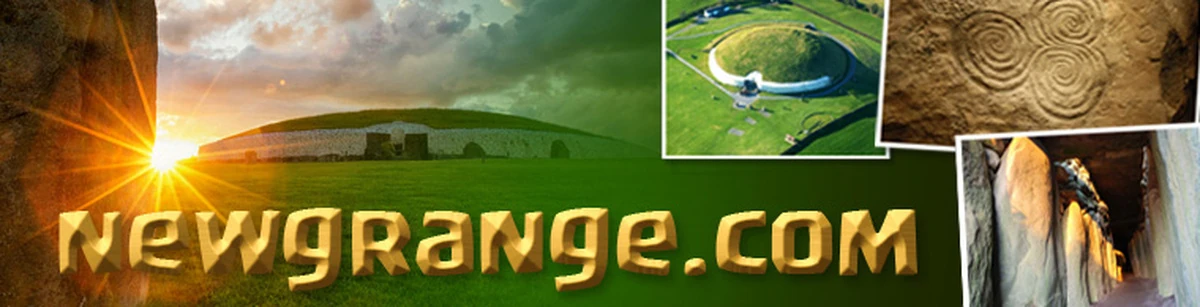
Newgrange | Brú na Bóinne
Neolithic Ireland supported substantial populations capable of organising quarrying, transport and multi-decade construction projects. Newgrange demonstrates what those communities could achieve without metal tools or wheeled transport.
Inside the mound, art includes the famous tri-spiral on orthostat C10, picked circles on roof stones and motifs on sill stones. The kerb ring extends that decorative programme to the exterior, visible to anyone circling the monument.
Seasonal lighting inside the chamber differs from the single dramatic solstice event; researchers have also studied equinox and cross-quarter shadow interactions between kerb art and Great Circle stones.
Kerbstones 22 to 46 remain buried, as noted on the kerbstones index; kerbstone K21 is only partly visible; several others lean forward after centuries of cairn movement.