Edward Lhwyd at Newgrange in 1699
When the Welsh naturalist and antiquary Edward Lhwyd visited Newgrange in 1699, he recorded one of the earliest surviving modern descriptions of the great passage tomb. His observations, together with a plan drawn by his assistant Will Jones, mark the beginning of the modern antiquarian study of Newgrange.
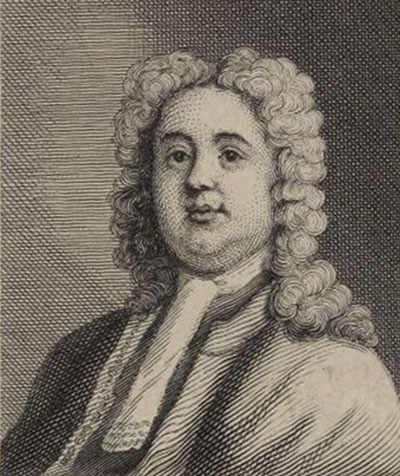 Edward Lhwyd (1660-1709)
Newgrange rediscovered
By the end of the seventeenth century the entrance passage at Newgrange had long been concealed. The opening came to light when labourers working for the landowner, Charles Campbell, began removing stone from the mound for building material. During this work they encountered the great decorated entrance stone and the passage leading into the monument.
Lhwyd was travelling through Ireland at almost exactly the right moment. Already well known for his interest in natural history, languages and antiquities, he visited the newly opened monument and began recording what he saw.
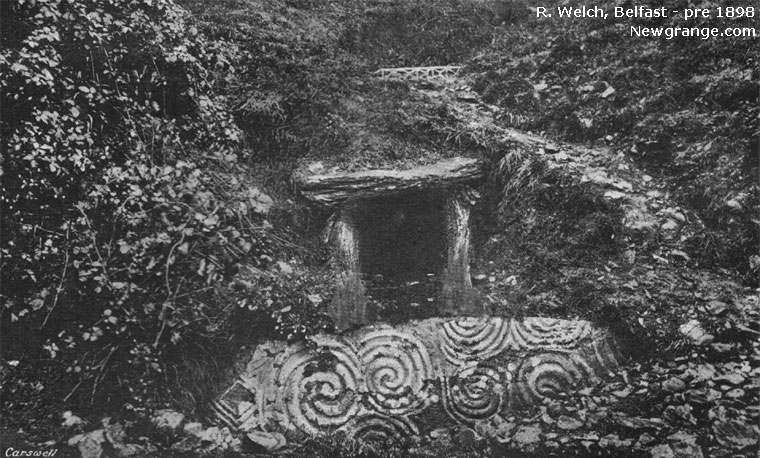 A 19th century photo of the entrance stone at Newgrange.
Lhwyd's description of Newgrange
In a letter written on 15 December 1699, Lhwyd described Newgrange as the most remarkable antiquity he had encountered on his journey. His account gives a rare impression of the monument before modern excavation, conservation or reconstruction.
"The most remarkable Curiosity we saw by the way, was a stately Mount at a Place called New Grange near Drogheda..."
He noted the great stones surrounding the mound and the stone standing on its summit. He also described how the entrance had been uncovered and how the passage led inward to a chamber.
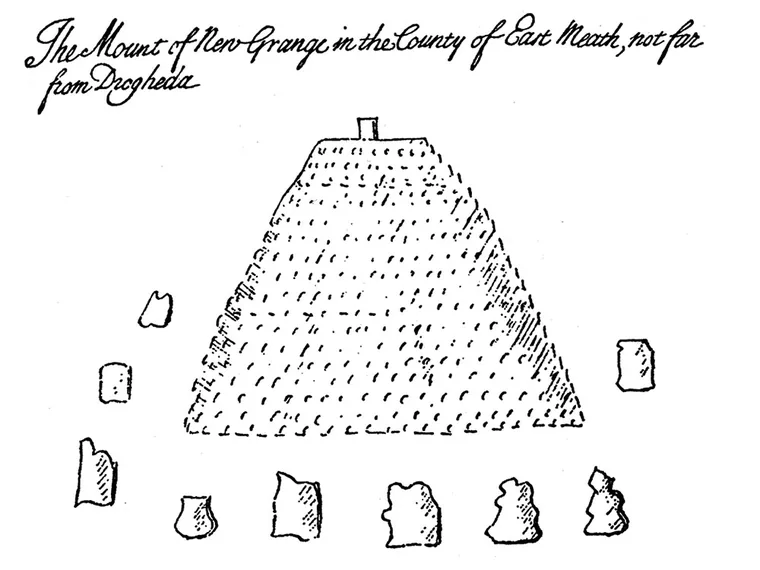 Lhwyd's 1699 sketch of "The Mount of New-Grange in the County of East Meath, not far from Drogheda."
The drawing is the earliest view of the exterior. It records what a visitor saw before the mound was grassed over or the facade rebuilt: a heap of loose stone, a standing stone on top, and a broken ring of orthostats. Contemporary accounts already counted twelve circle stones. This sketch shows nine, with the tallest clustered before the entrance. The summit stone Lhwyd mentioned has since disappeared.
Lhwyd referred to the monument as a "cave", terminology commonly used by antiquaries of the period for artificial underground chambers. At the time, the true date and purpose of Newgrange were completely unknown.
Inside the passage and chamber
In correspondence with the Irish physician and antiquary Thomas Molyneux, Lhwyd provided further details of the interior. He observed that a visitor initially had to stoop or crawl in the low passage, which gradually became higher towards the chamber.
"Having enterd the Cave you have on each Hand a Cell or Apartment and another streight forward."
This is a recognisable description of the cruciform chamber at Newgrange, with its three recesses opening from the central chamber. Lhwyd also took notice of the carved stones and attempted to interpret both the monument and objects reportedly discovered there.
What did Lhwyd think Newgrange was?
Lhwyd was writing more than two centuries before radiocarbon dating established the true antiquity of Newgrange. He considered several possible origins for the monument, including Roman and Danish or Viking construction.
He rejected a Roman origin, judging the architecture and carvings unlike Roman work. He also questioned a Danish attribution and eventually suggested that Newgrange may have been associated with religious practices of the ancient Irish.
His interpretation was wrong in chronological terms, but his willingness to compare the evidence and reject explanations that did not fit what he saw was an important step towards a more systematic study of Irish antiquities.
The first known plan of Newgrange
Lhwyd travelled with a draughtsman, William "Will" Jones. Jones prepared a plan of the passage and chamber at Newgrange around 1699. The drawing is the earliest known plan of the interior of the monument.
The original survives in the collections of Trinity College Dublin. The Brú na Bóinne World Heritage Site Research Framework reproduces it as "Edward Lhwyd's plan of the Newgrange tomb interior, drawn by Will Jones c. 1699".
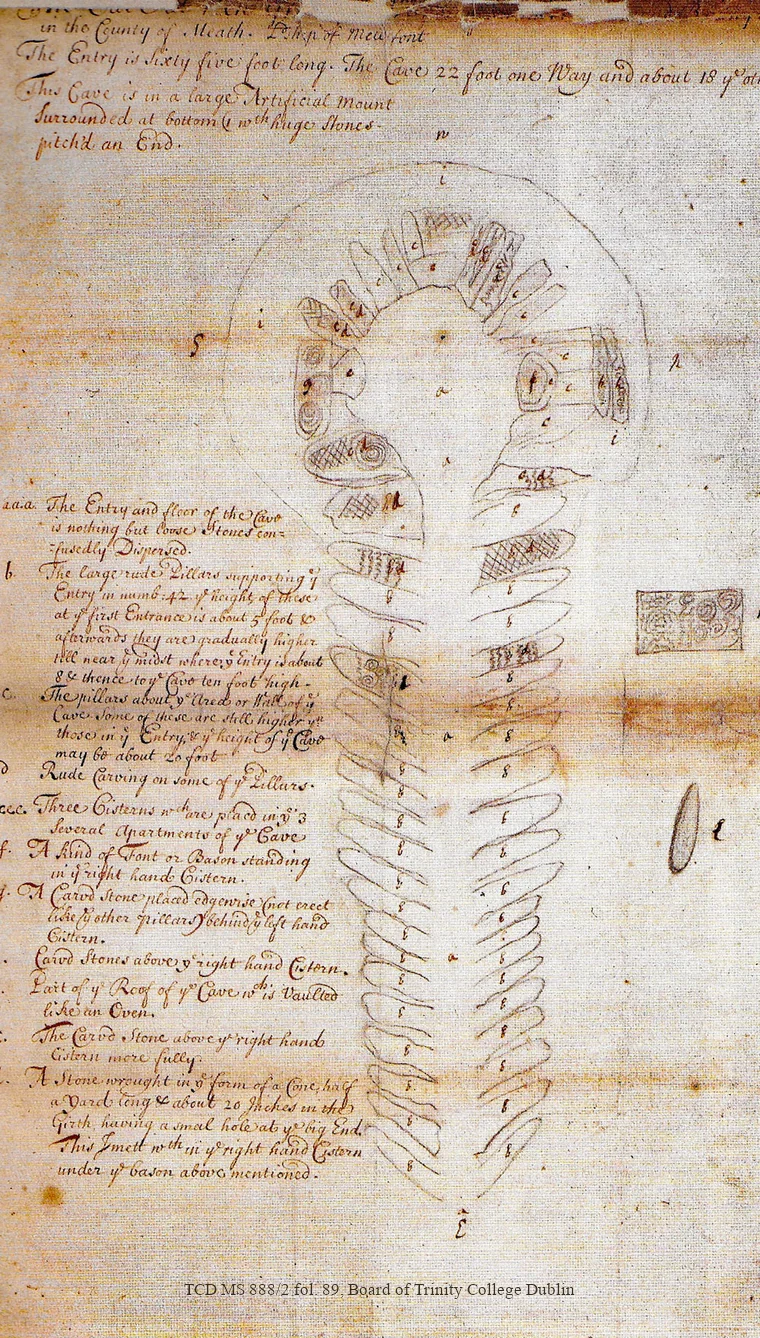 Will Jones's c. 1699 plan of the Newgrange passage and chamber.
TCD MS 888/2 fol. 89, Board of Trinity College Dublin.
Will Jones's c. 1699 plan of the Newgrange passage and chamber.
TCD MS 888/2 fol. 89, Board of Trinity College Dublin.
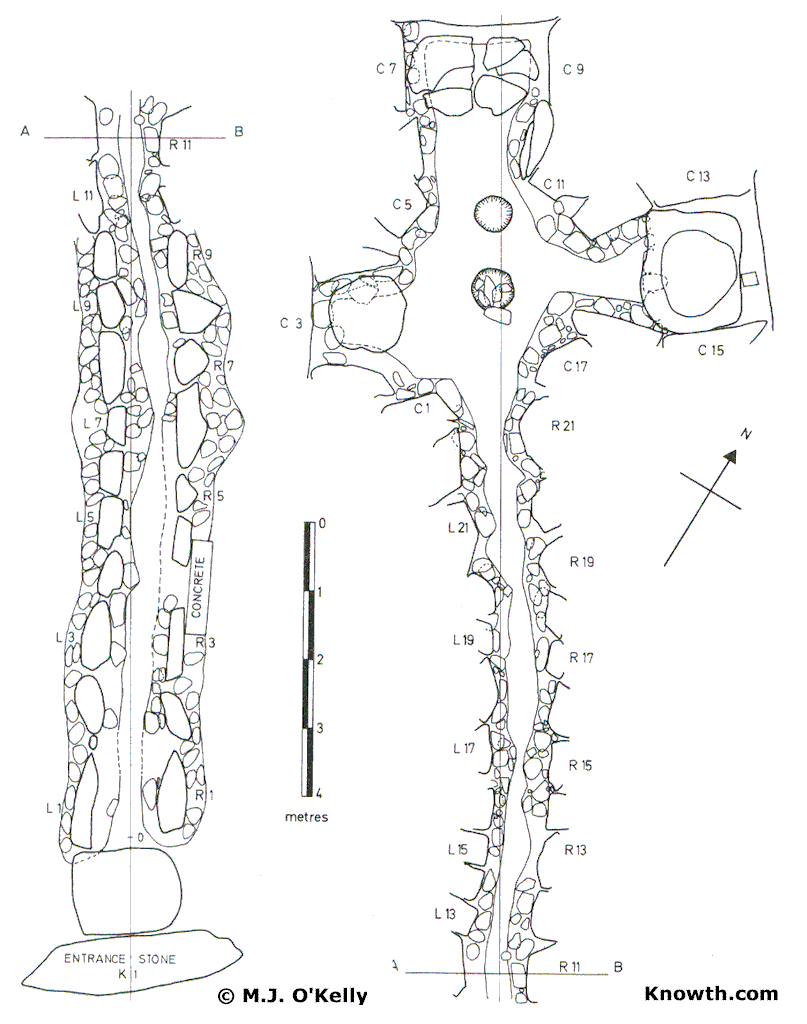 Later plan of the passage and chamber by Michael J. O'Kelly. See Newgrange plans.
The Royal Society record
Lhwyd's antiquarian observations soon reached the Royal Society in London. An account entitled Account of Some Roman, French and Irish Inscriptions and Antiquities lately found in Ireland and Scotland by Mr Edward Lluyd [Lhwyd] was read to the Royal Society on 26 February 1700.
The manuscript survives in the Royal Society Archives and has been digitised as part of the Royal Society's Science in the Making collection.
View the Edward Lhwyd manuscript at the Royal Society
Why Lhwyd's visit matters
Newgrange had, of course, been known in Irish tradition and literature for many centuries before Lhwyd arrived. Nor was 1699 the first time people had entered or encountered the monument since the Neolithic period.
What makes Lhwyd's visit particularly important is that it provides one of the earliest surviving detailed antiquarian records of the monument in modern times. His letters describe its exterior, passage, chamber, recesses and decorated stones, while Jones's drawing provides the first known plan of its internal arrangement.
Together they preserve an invaluable picture of Newgrange at the beginning of its modern archaeological history, more than 260 years before Michael J. O'Kelly began the excavations that transformed our understanding of the monument.
Edward Lhwyd
Edward Lhwyd was born in 1660 and became associated with the Ashmolean Museum at Oxford, eventually serving as its second Keeper. His interests ranged across botany, geology, fossils, languages and archaeology. Between 1697 and 1701 he undertook extensive journeys through Britain and Ireland gathering information for his studies.
His visit to Newgrange formed only a small part of this much larger project, but it left an enduring record of one of Europe's great prehistoric monuments at a crucial moment in its rediscovery.